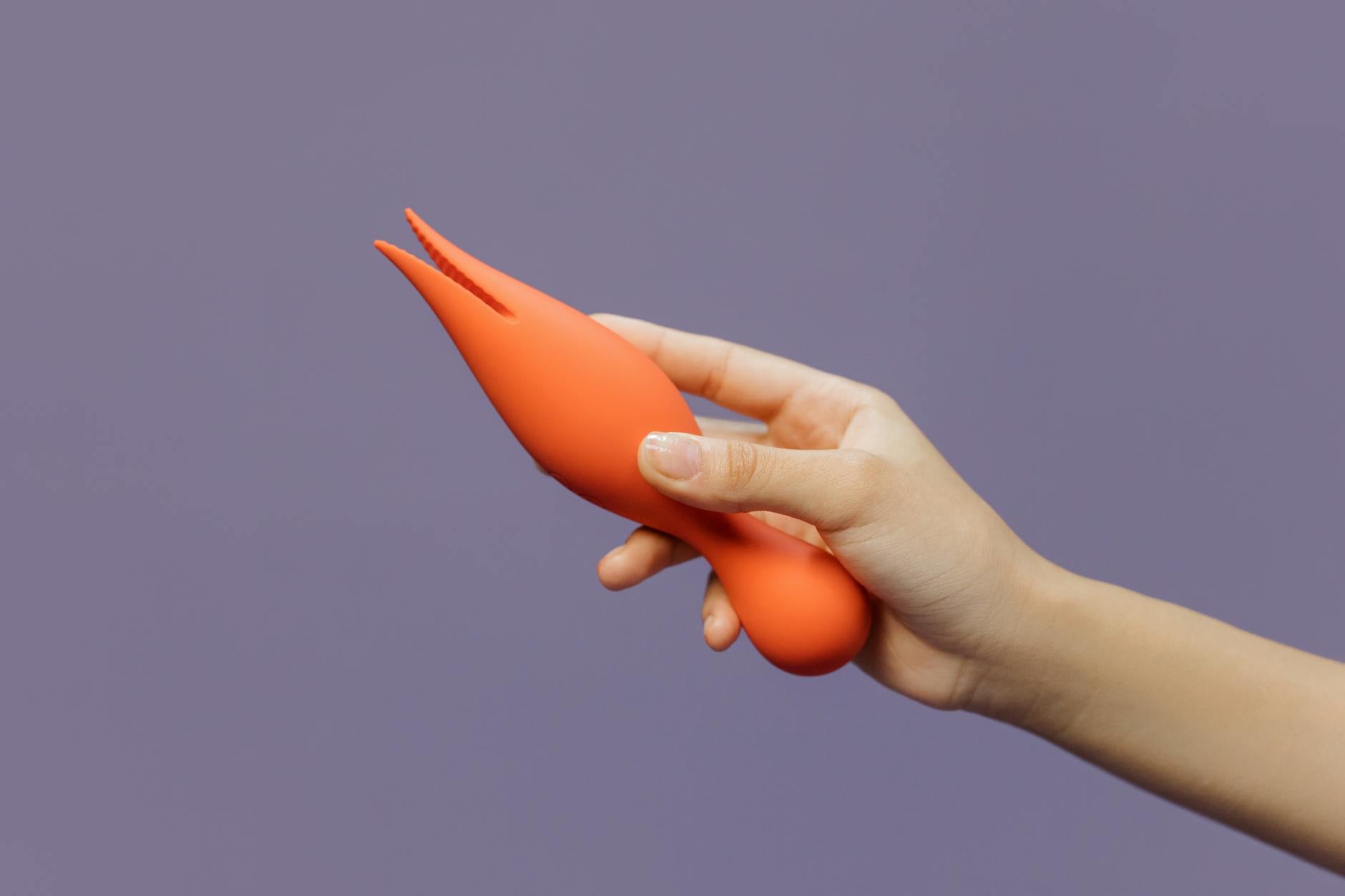
If you've just switched to a lemon clitoral vibrator from a traditional buzzer, or you're trying one for the first time period, the first session might feel underwhelming. That's not because lemon vibrators don't work. It's because your body is meeting a completely different kind of stimulation, and your nervous system needs time to catch up.
I see this constantly with clients. They expect instant fireworks. Instead they get a gentle hum and think, "Wait, that's it?" Then they text me three weeks later saying they can't imagine life without it. The adjustment isn't about the toy failing you. It's about learning a new language your body speaks.
The first time you use a lemon vibrator, your expectations are probably misaligned with reality. You might be comparing it to the last toy you used, which creates immediate frustration. That's normal. Don't judge the toy yet.
The first week is about exploration without expectation. Use it for five to ten minutes at low settings, just to see what patterns feel good. Don't pressure yourself to orgasm. You're basically introducing your clitoris to a new type of sensation. Suction-based stimulation (which lemon vibrators deliver) works differently than the direct vibration you might be used to. It's gentler initially, more focused, and often more intense once your body learns to trust it.
Most people report that sessions one through three feel like "okay, it's nice" rather than "oh my god." That's exactly right. You're not supposed to feel the same thing as your old toy. You're supposed to feel something new.
Set a timer for two weeks minimum before deciding whether this is for you. I know that sounds long, but your body literally needs that much time to develop new neural pathways around this kind of pleasure. That's not me being optimistic. That's neuroscience.
Around day eight to ten, something shifts. The novelty wears off. The sensation becomes more familiar. Here's where most people hit a wall and assume lemon vibrators aren't their thing.
This is actually the critical moment. You're past the "what is this?" phase but not yet at the "oh wow" phase. Some people describe it as needing to "warm up" to the toy, and that's accurate. Your nervous system is still calibrating.
Keep using it. Consistency matters more than intensity here. Twenty minutes twice a week will teach your body faster than a marathon session once a month. The suction mechanism needs repetition to feel natural, the way your brain needs repetition to get comfortable with any new sensation.
If you're getting frustrated, resist the urge to jack up the intensity to pattern five immediately. Stay at two or three. Let the sensation build slowly. Many people abandon lemon vibrators because they jump to max settings too fast, expecting the old toy's loudness to equal pleasure. It doesn't work that way. Suction-based vibrators build pleasure through consistency and patience, not blunt force.
Somewhere between day 22 and day 30, most people report a distinct shift. Orgasms start feeling different (often deeper or more localized). The toy stops feeling foreign and starts feeling like a natural extension of what you want. Some describe it as the toy "clicking" with their body.
This isn't mystical. Your brain has literally formed new associations and preferences around this stimulus. The suction isn't novel anymore, so your nervous system can relax and actually enjoy it instead of analyzing it.
At four weeks, you're usually past the adjustment phase entirely. What takes longer is discovering your preferences. Maybe pattern three feels better than pattern one. Maybe you prefer a certain angle. Maybe you like it better with a partner watching. Those micro-discoveries happen over months, not weeks. But by four weeks, you should know if this is a toy you want to keep using.
Lowered expectations. Don't expect your first orgasm on a lemon vibrator to match your best orgasm ever. Expect it to feel different. That reframing alone cuts adjustment time significantly.
Lubrication. Water-based lube makes everything easier initially, especially if your tissues are sensitive. It reduces friction, lets the suction work more effectively, and honestly just makes the whole experience feel less clinical.
Longer foreplay.How to use lemon vibrators when menopausal changes affect arousal covers this in depth, but the takeaway is simple: your arousal level directly affects how quickly your body adapts. Spend fifteen minutes on foreplay, relaxation, or whatever gets you mentally present before the toy even comes out.
Comfort and privacy. Adjustment is harder when you're worried about being interrupted or when your hips are tense from gripping the edge of the mattress. Make sure you have actual space, actual time, and the confidence that you won't be disturbed for thirty minutes.
Pressure to orgasm is the biggest saboteur. If you're using the lemon vibrator because you "should" or because you're worried your partner will be disappointed, your nervous system picks up on that immediately. Pleasure grinds to a halt.
Too much intensity too fast signals danger to your nervous system. If you jump to the highest pattern on day one, your body tenses up defensively. You're effectively telling your clitoris that this sensation is scary. Walk back the intensity and start lower.
Inconsistency also slows adjustment. Using a lemon vibrator once a week means your body never gets comfortable enough to relax into pleasure. Consistency trains your nervous system that this is safe and normal and worth engaging with.
Most people clear the adjustment phase in two to four weeks. Some take longer, and that's fine. A few take two months. The timeline isn't fixed.
If you're past eight weeks and still not feeling much of anything, it's worth asking: Is this actually the right toy for my body, or am I still in adjustment? The way to tell is whether anything has shifted at all. Are sensations more localized? Are your orgasms different? Is the toy quieter feeling than it was at week one?
If yes to any of those, you're adjusting. Just slower. Keep going.
If nothing has shifted and everything feels identical to week one, the toy might genuinely not be for you. That happens. Not every body loves suction. Some people do best with traditional vibration or with wand-style toys. If a lemon vibrator truly isn't working after eight weeks of consistent use, you haven't failed. You've just learned something useful about yourself.
If you're using a lemon vibrator with a partner, the adjustment period can feel different. Some partners find it genuinely helpful because you can show them exactly what feels good and guide them. Other people find it awkward to adjust with an audience. There's no right answer, but knowing which camp you're in matters.
If you're the type who needs solo time to adjust, take it. Use the toy alone for two weeks, get comfortable, then bring your partner in once you know what you like. That usually goes faster than trying to figure it out together from day one.
Days one to seven: introductory phase. Not impressive yet. That's fine.
Days eight to twenty-one: plateau and recalibration. Most people here think the toy isn't working. They're wrong.
Days twenty-two to thirty: breakthrough phase. Most people feel a shift here.
Day thirty onward: fine-tuning and discovering preferences. The toy works, you're just getting better at using it.
If your body learns faster, great. If it takes longer, that's also fine. What matters is consistency and patience. Your nervous system is literally rewiring its expectations around pleasure. That takes time. But when it does, most people report that lemon vibrators become their favorite tool for pleasure.
Twice a week is the sweet spot for most people. Once a week works but stretches the timeline out. More than three times a week isn't necessary and might not speed adjustment meaningfully, though some people prefer daily exploration. The real variable is consistency over frequency. Steady twice-weekly use beats sporadic daily use.
No. Switching settings every thirty seconds actually slows down your body's ability to recognize and respond to the sensation. Let your body sit with one pattern for at least five minutes before changing. Your clitoris needs time to build arousal around a consistent stimulus. Switching constantly resets that clock.
Start at pattern one and stay there for your first five to ten sessions. Intensity settings exist precisely so you can meet your body where it is. Using the lowest setting isn't a failure of the toy. It's smart adaptation. You can always turn it up later. You can't undo overstimulation once it's happened.
Slightly. Suction-based vibrators like the Lem vary in size, pattern intensity, and design. A smaller toy might feel less intimidating and adjust faster. A toy with softer silicone might feel gentler. Your very first lemon vibrator might have a longer adjustment than your second one simply because the first one is novel and the second one is just "another lemon vibrator."
Yes, usually. People switching from traditional vibrators (bullets and eggs) tend to have longer adjustment periods because the sensation is more different. People switching from wand vibrators sometimes adjust faster because both tools are larger and work with broader pressure areas. That said, individual variation matters more than the category you're coming from.
Absolutely. Adjustment happens in your nervous system, and stress puts your nervous system in defense mode. If you're stressed, anxious, or experiencing relationship tension, your body takes longer to relax into pleasure. If you can address the stress, adjustment usually speeds up. If you can't, that's okay too. You're not on a deadline.