The honest truth about birth control and pleasure
Yes, hormonal birth control changes how you experience pleasure. Not in a catastrophic way, but enough that you might notice. The pill, the patch, the ring, the implant, the shot—they all flatten your natural hormonal cycle by maintaining steady, low levels of estrogen and progestin. Your body stops cycling through highs and lows. That consistency is the whole point of birth control. But consistency also means your arousal pattern becomes, well, consistent. Which is different from what you might be used to.
I work with couples and individuals who suddenly feel disconnected from their sexuality after starting hormonal birth control, and it's rarely because anything is broken. It's because something fundamental shifted, and nobody warned them. A lemon clitoral vibrator won't fix hormonal changes, but understanding how they work together can change everything.
How hormonal birth control actually changes sensation
Hormonal birth control suppresses your natural surge of luteinizing hormone, the trigger that releases an egg each month. As a side effect, it also dampens the estrogen and testosterone peaks that usually pulse through your cycle. Estrogen affects blood flow, tissue sensitivity, and lubrication. Testosterone drives desire itself. When both are flattened, you're left with a steadier but quieter baseline.
What does that feel like? Most people describe it as either numbness ("I don't feel turned on anymore") or a muted response ("It takes longer, and the sensation isn't as intense"). Some people feel nothing unusual. Bodies are wildly variable.
The clitoris, though, doesn't disappear. The neural pathways are still there. Sensitivity is still there. What changes is how quickly arousal builds and how obvious it feels when it's building. Think of it as turning down the volume instead of switching off the speaker.
Why lemon vibrators work particularly well with birth control
A traditional vibrator uses rapid oscillation to build sensation fast. It works beautifully when your body is in a natural high-arousal window. But if birth control has quieted your baseline, you need a different approach.
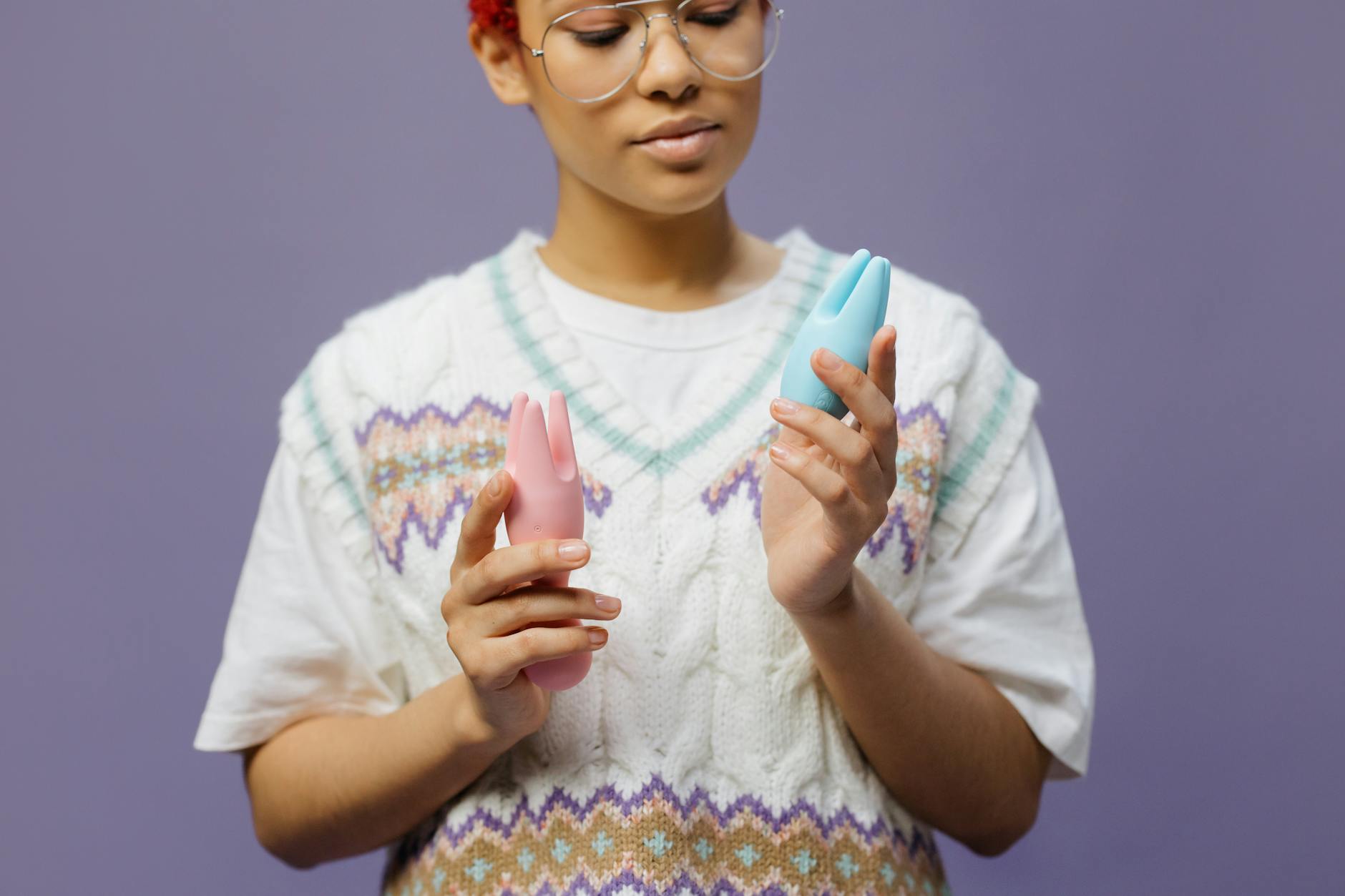
Lemon sucking vibrators use air-pulse technology instead of direct vibration. Rather than sending shocks of intensity into tissue, they create a gentle suction rhythm that mimics oral stimulation. It's a different signal entirely—one that doesn't rely on rapid arousal peaks. Instead, it encourages a slower, more sustained build that works better with a flattened hormonal landscape.
This is why so many people on hormonal birth control discover clitoral vibrators like the Lem and wonder why it took them so long. The technology meets the body where it actually is, rather than demanding the body speed up to match the tool.
The timing piece nobody talks about
Here's something that surprises most people: even on hormonal birth control, your body is not completely flat. Your circadian rhythm still influences hormone levels, cortisol still spikes and drops, and your body still has micro-fluctuations. They're just smaller.
You might notice that you feel more aroused in the evening, or more responsive after exercise, or more interested in pleasure on days when you're less stressed. These aren't imaginary. They're real, just quieter than the dramatic swings of a natural cycle.
This matters for understanding why sometimes a lemon vibrator feels amazing and sometimes it feels like you're just going through the motions. It's not the toy. It's the real, subtle rhythms of your body still working beneath the steady hormone dose.
What changes and what absolutely doesn't
Let me be clear about what birth control doesn't touch: your ability to have an orgasm. Full stop. The neural pathways for pleasure are independent of hormonal birth control. You're not broken, and you haven't lost capacity. You've lost some of the accelerant.
Some people on birth control report that orgasms feel different—sometimes less intense, sometimes more focused, sometimes they take longer to reach. That's real. But "different" is not "impossible."
What also doesn't change: your right to pleasure, your deserving of connection, or the fact that your sexuality matters. Birth control doesn't revoke any of that. It just means you might need to be more intentional about creating conditions that work with your body instead of against it.
The practical adjustments that actually help
If you're on hormonal birth control and feeling disconnected from pleasure, try these three things before assuming something is wrong with you.
First, extend your warm-up time. Give yourself 15 to 20 minutes of non-goal-oriented touch before you bring in a toy. This might be your partner, your hands, or simply time alone exploring what feels good without any agenda. Birth control doesn't erase arousal; it just makes it quieter. Quiet arousal needs more time to build.
Second, use a lemon suction vibrator instead of a traditional one. The air-pulse rhythm creates a different kind of stimulation that works better with a steadier baseline. Start at a lower intensity setting and build gradually. You're not pushing harder; you're giving your nervous system time to catch up.
Third, pay attention to stress and sleep. Cortisol is the enemy of desire, and birth control doesn't protect you from that. Poor sleep tanks arousal. Chronic stress makes everything feel muted. These are not hormonal failures; they're just life. Address them, and pleasure usually gets louder again.
The relationship conversation you might need to have
If you're with a partner, the most important thing you can do is separate the conversation about your body's response from the conversation about desire or attraction. "My arousal pattern changed when I started birth control" is a different topic than "I don't want you anymore." Confusing them causes real damage.
Your partner needs to understand that slower arousal or muted sensation has nothing to do with how much you want them. And you need to understand that they might feel the shift too, and that's worth talking through without blame.
Introduce a lemon clitoral vibrator as a shared tool, not a workaround for a broken system. Use it together. Notice what works. This is exploration, not troubleshooting.
When to talk to a doctor
If birth control has completely eliminated your desire, or if you're experiencing pain where there wasn't pain before, see your prescriber. Not because you're damaged, but because some people genuinely do better on different formulations or different methods entirely. Some people find that a lower-dose pill works better. Others discover that a non-hormonal method (IUD, copper) restores their natural cycle entirely.
You don't have to choose between reliable birth control and sexual pleasure. Sometimes you need to find the formulation or method that lets you have both. That's a legitimate medical conversation, not a vanity issue.
The bottom line
Hormonal birth control changes your pleasure landscape. It doesn't end it. Understanding the difference between "different" and "broken" is the shift that lets you move forward. A lemon vibrator won't erase the hormonal reality, but the right tool, combined with patience and intention, can make the experience feel connected and responsive again. Your pleasure still matters. Your body still works. You're just learning a new language with it.
People also ask
Does hormonal birth control reduce orgasm intensity?
For some people, yes, orgasms can feel less intense when on hormonal birth control. The dampened testosterone and estrogen levels can affect the strength of muscle contractions during orgasm. But intensity isn't the only measure of pleasure. Many people find that a longer, slower build creates a different kind of satisfaction. If orgasm intensity is affecting your quality of life, talk to your doctor about whether a different birth control formulation or method might work better for you.
Can I use lemon clitoral vibrators with all types of birth control?
Absolutely. Lemon vibrators are compatible with any birth control method. The suction technology works independently of your hormonal state. However, different birth control methods create different hormonal profiles. An IUD creates a much quieter local effect than a pill, so your arousal pattern might be slightly different depending on which method you use. Experiment and see what feels natural to you.
Why does my desire drop off after a few months on birth control?
This can happen for a few reasons. Sometimes your body genuinely needs time to adjust to the hormonal baseline. Sometimes it's psychological—you're relieved about contraception but also grieving the loss of your natural cycle. Sometimes it's unrelated to birth control entirely; stress, relationship issues, or medical conditions can look identical to hormonal desire loss. Track when the shift happened relative to other life changes. The timing often tells you a lot.
Will my pleasure come back if I stop birth control?
Usually, yes. Most people report that arousal bounces back within a few cycles after stopping hormonal birth control as their natural hormonal rhythms resume. But that's not guaranteed. If other things in your life have changed (relationship stress, health issues, medication side effects), those might still be affecting you. And some people find they actually prefer their pleasure response on birth control. Your body, your choice.
Is it normal to feel nothing during sex on hormonal birth control?
It's not uncommon, but it's not permanent or unchangeable. Numbness can come from dampened sensation (real and hormonal), disconnection (psychological), or a combination. Start with the basics: longer warm-up, lower-intensity stimulation tools, addressing stress, and talking to your partner. If nothing shifts after a few weeks of intentional change, see your doctor. Sometimes a different formulation helps. Sometimes you need a different tool entirely.
Do lemon vibrators work better at certain times of the month on birth control?
Even on hormonal birth control, your body still has small circadian and micro-hormonal rhythms. You might notice you feel more responsive in the evening, after exercise, or on days when you're less stressed. But because birth control flattens the cycle, these shifts are usually subtle. Pay attention to your own patterns. Some people find that lemon vibrators feel best consistently, while others notice gentle variations. There's no universal timeline—only your timeline.
Sources
This article is informed by clinical research on hormonal contraception and sexual response, including studies from the Journal of Sexual Medicine on arousal patterns in hormonal contraceptive users. For specific medical questions about your birth control and sexual response, consult with your gynecologist or primary care provider. You can also reach out to Hello Nancy's team at /contact for conversations about pleasure and how different tools might support your experience.