The thing nobody warns you about
You got the pill (or the patch, or the shot, or the ring) to prevent pregnancy, regulate periods, or clear up acne. Nobody mentioned that you might wake up one day and realize you don't want sex anymore. Like, at all.
This is not a character flaw. This is not your relationship. This is hormones, and it's wildly common. About one in three women on hormonal birth control experience a measurable drop in sexual desire. Your doctor might have mentioned "mood changes" in passing, but "your libido could vanish" gets buried in the fine print.
Here's what I need you to know: it's fixable. Not always by switching methods (though that's sometimes the answer), and not by pretending to want sex until you do. It's fixable by understanding what's actually happening in your body, and then choosing tools that work with your brain chemistry instead of against it.
Why hormonal birth control tanks desire
The mechanism is straightforward, even if the solution isn't.
Hormonal contraceptives suppress ovulation by keeping your estrogen and progesterone levels artificially stable. That's the point. But testosterone is the hormone most directly tied to sexual desire in people of all genders, and hormonal birth control suppresses testosterone production. Some studies show a 30 to 50 percent drop in free testosterone while you're on it.
That's not insignificant. Testosterone drives the physical stuff (genital blood flow, clitoral sensitivity, spontaneous arousal) and the mental stuff (motivation to initiate, fantasy, sexual confidence). When it drops, both layers flatten.
There's also a secondary effect: hormonal birth control shifts the balance of binding proteins in your blood. Even if your total testosterone stays stable, the amount of testosterone your body can actually use (free testosterone) shrinks. You're running the same engine on lower fuel.
And then there's the psychological layer. Some people experience mood flattening on hormonal contraceptives. If everything feels a bit gray, so does sex.
It's not just about desire
Sometimes the problem isn't that you don't want sex. It's that your body doesn't respond the way it used to.
Arrousal might take longer to build. The physical signs that used to show up automatically (lubrication, genital fullness, nipple sensitivity) might feel muted or absent. Some people find that orgasms feel less intense, or that they need more direct stimulation to reach climax.
This is different from the guilt-based stuff or the disconnection some people experience. This is pure physiology: lower testosterone means less robust genital blood flow, less clitoral sensitivity, and changes to the nerve endings that fire during arousal.
If this is your experience, you're not broken. Your nervous system is just receiving a different chemical signal.
What you should know before switching
The obvious answer feels like "switch birth control." And sometimes that's right. If you've been on the same method for six months and desire still hasn't returned, talking to your doctor about a lower-dose option or a non-hormonal method (copper IUD, barrier methods) makes sense.
But here's the thing: not everyone wants to switch. Maybe the hormonal method you're on is the only thing that stops your migraines. Maybe you've tried copper and it made your periods unbearable. Maybe you have a partner or a life circumstance where you can't be off hormones right now.
And even if you do switch, the desire bump might take three months to show up. Your body needs time to recalibrate once you stop suppressing testosterone.
While you're waiting (or while you're staying put), there are things that actually work.
Why lemon clitoral vibrators change the game
Let me be specific here.
The lemon vibrator is a clitoral suction device. It doesn't vibrate in the traditional way. Instead, it uses gentle air-pulse technology to create rhythmic suction patterns that stimulate the clitoris without requiring the same level of baseline sensitivity to feel good.
When your testosterone is low and your genital tissue is less responsive, a traditional vibrator demands a lot from your body. You might need it on max power to feel anything at all. After a while, that becomes tiring. It's not actually pleasurable, it's just exhausting.
A lemon vibrator works differently. The suction patterns activate a wider network of nerve endings around the clitoris. You don't need the same baseline sensitivity. Even if sensation feels muted, the rhythmic pressure still registers as pleasurable.
One of my clients described it like this: "With the vibrator, I was chasing sensation. With the lemon, sensation comes to me."
It's not magic. It's just a different way of stimulating tissue that's currently running on a lower neurological setting.
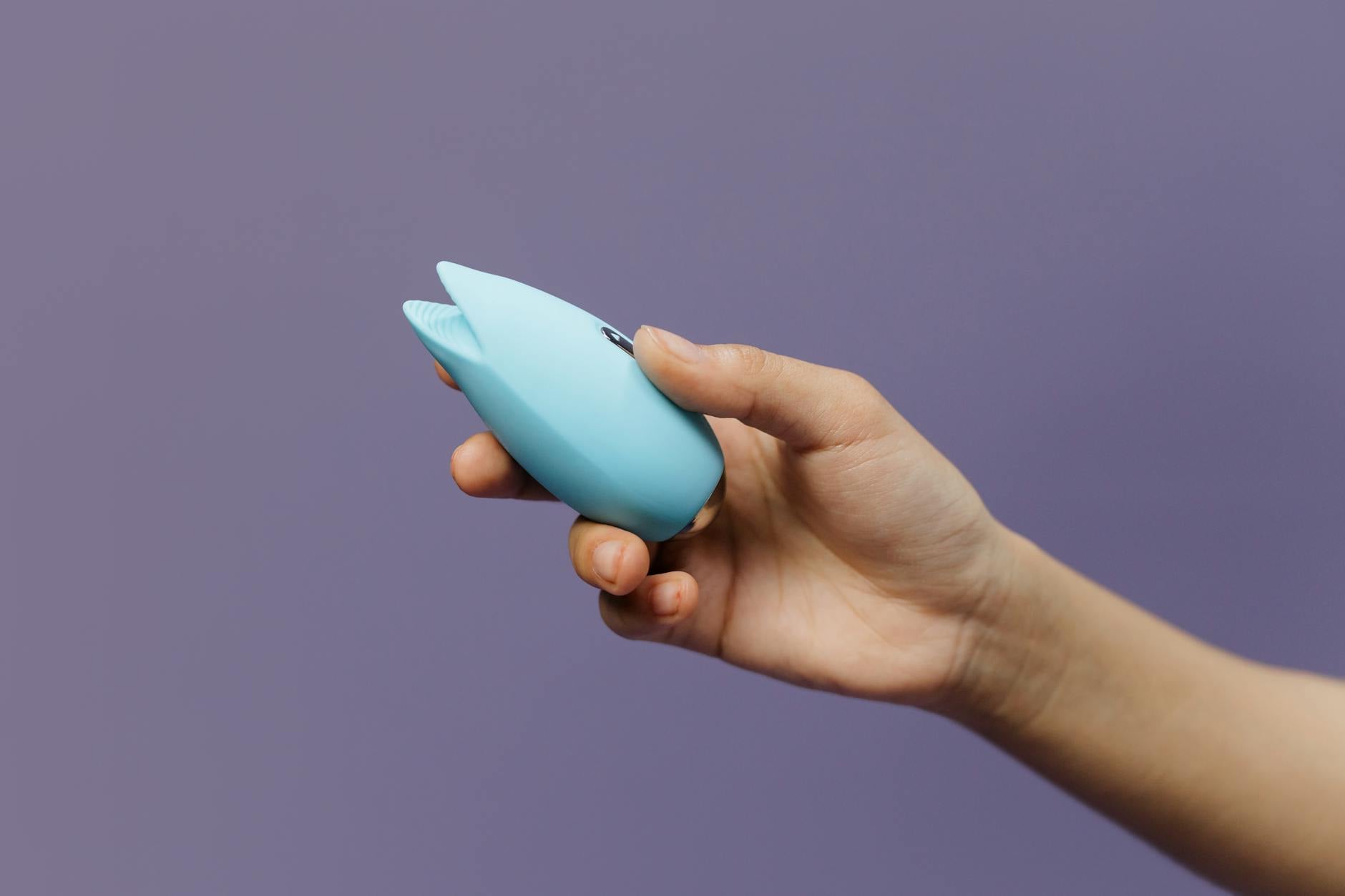
Photo by cottonbro studio on Pexels
How to rebuild arousal while on hormonal contraceptives
Three moves:
First, let go of spontaneous desire as the goal. If you're on hormonal birth control and experiencing desire loss, spontaneous arousal might not come back. And that's okay. Responsive desire (desire that builds once you start touching yourself or being touched) is just as valid. Plan time for sex or solo exploration the way you'd plan a workout. This isn't unromantic. It's realistic.
Second, extend your warm-up window. When testosterone is lower, arousal builds more slowly. You're not broken if it takes 15 to 20 minutes of foreplay to feel engaged. That's just your current timeline. Work with it instead of fighting it.
Third, invest in better tools. A lemon vibrator or similar clitoral suction device becomes less of a "nice to have" and more of a strategy. You're not using it because you're needy or oversexed. You're using it because your current hormonal state means your body needs different input to reach the same outcome.
The role of lubrication
Hormonal birth control can also affect vaginal lubrication, though the severity varies wildly between people.
If you're experiencing dryness alongside the desire loss, a good water-based lubricant isn't optional. It's part of the infrastructure. Apply it before you even start. Don't wait until things feel dry. This prevents the frustration of sensation loss on top of everything else.
Lube also works beautifully with lemon vibrators. It helps the suction device glide without friction and makes the whole experience feel richer.
When to think about switching methods
If six months have passed and you've implemented all of this and still feel nothing, that's a sign to revisit your contraception with your doctor.
Some people find that a lower-dose hormonal method (like a mini-pill or lower-hormone patch) preserves more testosterone while still preventing pregnancy. Others find that a non-hormonal method is the only thing that brings desire back.
A copper IUD carries its own tradeoffs (heavier periods, more cramping for some people), but desire usually returns completely. Some people use barrier methods (condoms, diaphragms) and accept the higher failure rate for the benefit of no hormonal suppression. That's a personal choice.
The point is: if birth control is tanking your quality of life, you don't have to accept that as the cost of contraception. There are other options.
It's not your fault, and it's not permanent
If you're sitting with a partner wondering why you suddenly don't want them anymore, that's a lonely place. Most of the conversation around hormonal birth control focuses on side effects like headaches or blood clots. Nobody talks about desire loss because it's harder to measure and harder to explain to someone who loves you.
Here's what to tell them: this isn't about attraction or love or your relationship. This is biochemistry. Your body is on a drug that suppresses the hormone that drives sexual motivation. That's a side effect, not a character development.
And it's reversible, or at least manageable, with the right combination of understanding, better tools like lemon clitoral vibrators, and possibly a different contraceptive approach.
Your pleasure matters. So does your ability to choose how you prevent pregnancy. Those two things aren't in conflict if you're willing to work around the edge cases.
FAQ: Lemon vibrators and hormonal birth control
Can I use a lemon vibrator while I'm on hormonal birth control?
Yes, absolutely. There's zero interaction between a clitoral vibrator and hormonal contraception. Using a lemon vibrator doesn't interfere with how your birth control works. It's just a tool to help you experience pleasure while your body is in a lower-testosterone state.
Will a lemon vibrator bring back spontaneous desire?
Not usually. Spontaneous desire is driven by baseline testosterone. If birth control is suppressing that, a vibrator can't restore it. What a lemon vibrator does is make responsive desire (desire that builds once you start stimulating yourself) much easier to access. You might not think about sex in the morning, but once you start playing with a lemon vibrator, your body will remember that pleasure is possible.
How long before I notice a difference if I switch birth control methods?
It depends on the method. If you switch from hormonal to non-hormonal, testosterone usually starts bouncing back within four to eight weeks. But psychological shifts and desire often take longer because you've spent months telling yourself you're not a sexual person anymore. Rewiring that takes time. Be patient with yourself.
Is it normal to have zero libido on birth control?
It's common enough that you're definitely not alone. Studies suggest 20 to 30 percent of women on hormonal contraceptives experience noticeable desire loss. Some research suggests it might be even higher. So while it's not universal, it's frequent enough that it shouldn't be dismissed as imaginary or your fault.
Can lube and a lemon vibrator actually make up for the testosterone drop?
They can't restore baseline testosterone, but they can help you experience pleasure without waiting for hormones to shift. Think of it as working with what you've got instead of fighting it. Once you rebuild the neural and psychological connection to pleasure, if you do switch contraception methods later, the transition back to higher desire feels smoother.
What if my partner thinks I'm choosing the vibrator over them?
That's a conversation, not a problem with the vibrator. Some partners assume that if you need a tool, they're failing you. That's not how this works. A lemon vibrator is infrastructure for accessing pleasure your body is currently less equipped to find on its own. Using it doesn't mean your partner is inadequate. It means you're both being smart about working with your actual nervous system instead of pretending the hormones aren't there.
The path forward
You don't have to accept desire loss as the permanent cost of contraception. But you also don't have to panic or immediately jump to switching methods if switching isn't practical for your life.
Understand what's happening biochemically. Give yourself permission to use tools like lemon vibrators that work with your current state instead of fighting it. And if nothing shifts after six months, absolutely have a real conversation with your doctor about other options.
Your pleasure matters. So does your reproductive autonomy. Both can be true at the same time. If you're struggling to make them coexist, reach out and let's talk through your specific situation. You don't have to figure this out alone.
Sources
Diana Hanson (2019). "Hormonal birth control and sexual desire." Obstetric and Gynecological Survey, 74(2), 79-87.
Conrad J. Zapata et al. (2019). "Testosterone levels in oral contraceptive users: A meta-analysis." Contraception, 100(3), 198-205.
Laura Rosen et al. (2019). "Sexual dysfunction in women on hormonal contraceptives." Current Sexual Health Reports, 11(2), 76-85.