Here's the gap nobody talks about
One of you has been using toys for years. The other is either newer to them, hesitant, or just prefers a totally different sensation. You're both ready to share pleasure, but you're not speaking the same language yet.
This is one of the most common friction points couples bring to me, and it's fixable. The problem isn't that you want different things. It's that you're comparing your experience to theirs instead of building a shared one.
Why lemon vibrators work when preferences differ
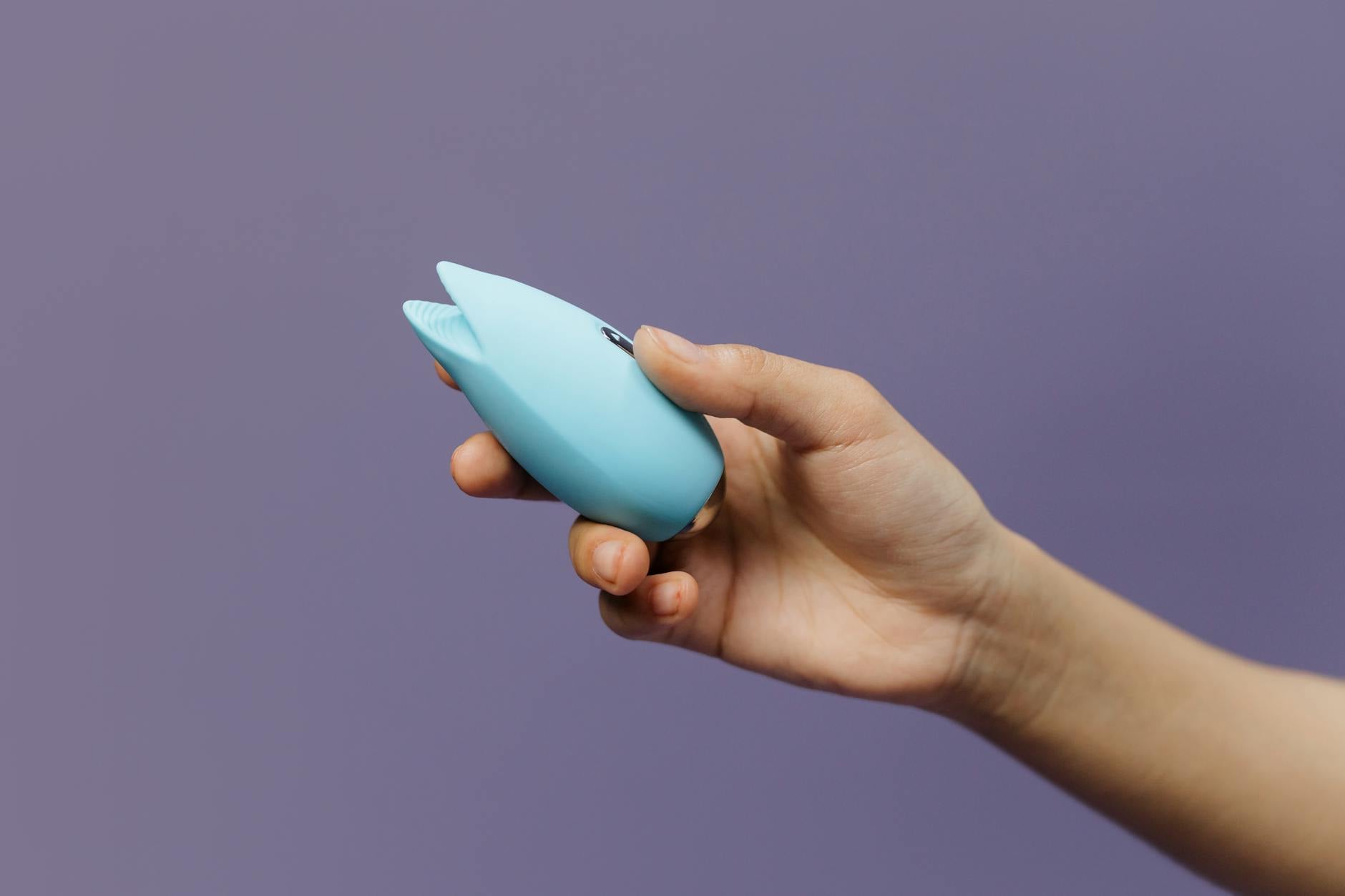
Lemon vibrators, and suction-based clitoral toys in general, have a particular advantage when partners are at different comfort levels or have different past experiences. Here's why.
First, suction feels fundamentally different from vibration. If your partner has been using traditional vibrators, the sensation of lemon vibrators might feel like a genuinely new experience rather than just a "different brand of the same thing." That newness matters. It resets the dynamic from "I'm comfortable, you're not" to "we're both exploring this together."
Second, the intensity control on a lemon clitoral vibrator is more nuanced than you might expect. You're not choosing between on and off. You're starting at a gentle pulse, then moving into stronger suction patterns. That gradual build means the less-experienced partner can ease in without feeling shocked. The more-experienced partner gets to feel how sensation builds rather than jumping straight to their usual intensity.
Third, lemon vibrators require a different kind of attention from both partners. They work best when there's intentionality about positioning and rhythm. That actually forces the conversation you need to have anyway: "What feels good right now?" "Should we go faster?" "Do you want me to try a different pattern?" You're not just using a toy; you're communicating through it.
The conversation before the toy arrives
Most couples skip this and jump straight to the moment, which is where the resentment starts.
Instead, have this one conversation when you're not in bed and not about to be. Say something like: "I want us to try this together, and I want you to know I'm not expecting you to feel the same things I do right away. We're learning this together." That's it. Three sentences. No pressure, no performance.
Then ask: "What makes you nervous about it?" or "What are you curious about?" Listen without fixing. Their concern isn't a problem to solve. It's information about what they need to feel safe.
The person with more toy experience often makes the mistake of being the expert, which immediately puts the less-experienced partner in a subordinate position. Don't do that. Say: "I've used toys before, but I've never used one with you. That's different." It is.
How to actually use them together
Start with the lemon vibrator on the lowest setting. Hand it to your partner and let them explore it on you first. Not because this is more generous, but because it gives them agency and control. They get to learn how it feels to hold, how the suction works, where the patterns are. Most of the nervousness dissolves when someone realises they're not just receiving but directing.
After a few minutes, switch roles. Your turn to feel it. This is important because now your partner isn't worried about "doing it right." They've already seen that there's no wrong way.
On the second or third time together, you can move to using it on them. But by then, the awkwardness is gone because you've already demystified it together.
What to do if the intensity still feels like too much
Some people come to toys with a lot of internalized scripts about what pleasure is supposed to feel like. They've imagined intensity because that's what they've heard. Then a lemon clitoral vibrator delivers actual suction, and it's different from the fantasy, so it feels "wrong."
This is not wrong. It's just different. The fix is patience, not coaxing.
Here's what I tell couples: use it for 30 seconds at a time, then stop. Ask: "How was that?" Not "Did you like it?" That's yes-no, which forces them to either lie or disappoint you. "How was that?" lets them say things like "Surprising," "More intense than I expected," "Kind of good," "Weird but interesting." Those are the real answers. After 5-10 of these micro-sessions, their nervous system adjusts. Sensation stops being alarming and becomes pleasurable.
The person who's done this before
If you're the one with experience, your job is not to teach. Your job is to stay curious about how your partner is experiencing this specific toy, at this specific moment, with you. Don't project your pleasure onto them. Don't speed things up because you want to get to the good part. There is no "good part" that you know about. You're building it together.
One more thing: don't use the toy as a workaround for connection. Couples sometimes think "If I introduce a toy, we'll automatically have better sex." Toys don't fix communication gaps. They just amplify whatever's already there. If you're not talking about pleasure, preferences, and boundaries without a toy, a toy won't magically make that happen. Use the lemon vibrator as a reason to have conversations you should be having anyway.
When you want different things, still
Sometimes after trying lemon vibrators together, you discover that one partner genuinely enjoys them and the other doesn't. That's okay. That's information, not failure.
The conversation then becomes: "I love how this feels. Can we use it sometimes, even if it's not your favorite?" The answer might be yes. It might be "Yes, but with X adjustment." It might be "Yes, but not every time." All of those are workable.
The couple who struggle are the ones who think they need to want the same things. You don't. You need to want each other to have pleasure, even if the route looks different.
FAQ: Navigating toy preferences with your partner
Q: How do I bring up that I want to try a toy if my partner isn't into them?
A: Separate the toy from the relationship. "I want to explore what feels good to me" is different from "I want more in our sex life." One is about your curiosity. The other triggers defensiveness. Start with the first. The second conversation can happen later, or not at all.
Q: What if my partner feels threatened by me using a lemon vibrator?
A: They probably feel like you're comparing them to the toy, or that they're not enough. That's about them, not about the toy. The answer is: "This isn't about you. This is about knowing my body better so I can be more present with you." Then prove it by being more present. Use the toy alone sometimes. That removes the threat.
Q: Can we use a lemon clitoral vibrator during partnered sex?
A: Absolutely. The positioning takes practice. You might want to experiment when you're not also managing penetration or other sensations. Once you know where it feels best and how to hold it, adding it during sex is a natural progression. Start with the lower patterns and build from there.
Q: My partner wants to use the toy on me, but I'm self-conscious. How do I get past that?
A: You don't get past it by forcing yourself. You get past it by going slowly. Use it on yourself first, in front of them, while they watch and ask questions. Seeing you enjoy it without pressure often shifts something in them. Vulnerability is contagious. They relax because you're relaxed.
Q: How often should we use a lemon vibrator together?
A: As often as you both want. There's no magic number. Once a week, once a month, randomly when the mood hits. The rhythm comes from desire, not obligation. If you're using it because you think you should, it'll feel like a chore. If you're using it because you both want to, it'll feel like play. That's the difference.
Q: What if I want more intense patterns but my partner is overwhelmed?
A: Use it separately sometimes. That's not a failure. That's good boundaries. You each get to have the experience that works for your body. When you're together, you can find a middle ground. This teaches you both that pleasure isn't about compromise. It's about respect.
You're building something new together
When you and your partner come to toys from different places, you're not bridging a gap. You're building a new language together. Lemon vibrators, with their unique suction sensation and gradual intensity, are a really good way to do that. They're different enough that neither of you has an "advantage" from past experience. You're both new to this together, even if you're not both new to toys.
That's the magic. Not the toy itself, but the permission to be curious in the same direction at the same time. That's where pleasure becomes something you share rather than something you do in the same room. There's a real difference, and couples who get that difference end up with sex that feels less like performance and more like connection.