Here's the thing about solo pleasure and shame
Let's be real: a lot of people feel weird about masturbation. Not in a theoretical way. In the actual, hand-hovering-over-your-body, stomach-tight-with-guilt way. You might have been raised with messages that solo sex is shameful, or selfish, or something you're supposed to outgrow. You might feel self-conscious even alone, which makes no logical sense and yet makes perfect emotional sense.
The thing is, self-consciousness blocks pleasure. When you're monitoring yourself, judging yourself, or bracing for judgment that doesn't exist, your nervous system stays in fight-or-flight. Orgasm requires the opposite state.
Why shame shows up around solo sex (and why it's not your fault)
Cultural messaging around masturbation has been actively hostile for centuries. Religious frameworks labeled it sinful. Medical institutions called it disease-causing. Parents whispered warnings. Schools taught silence. For many people, especially women and femme people, the message was clear: your solo pleasure is less legitimate, less important, maybe even wrong.
That's not just messaging. That's infrastructure. It gets baked into how you relate to your own body.
Here's what research actually shows: solo sex is healthy. It's how you learn your own arousal patterns. It's stress relief. It builds sexual confidence. It's also the most reliable way most people with vulvas experience orgasm. And yet the shame persists anyway.
How self-consciousness actually blocks sensation
When you're uncomfortable with what you're doing, your nervous system knows. Arousal requires parasympathetic activation. That's the "rest and digest" mode where your body feels safe enough to open up. Self-consciousness is the opposite. It's hypervigilance. It's your brain staying in protective mode while your body tries to relax, and those two things can't coexist.
You end up stuck. You want to feel pleasure, but you also feel weird about wanting it. So you rush through it, or you interrupt yourself, or you don't start at all. You might blame your body for not responding when really your mind is standing in the way.
Why lemon clitoral vibrators help specifically
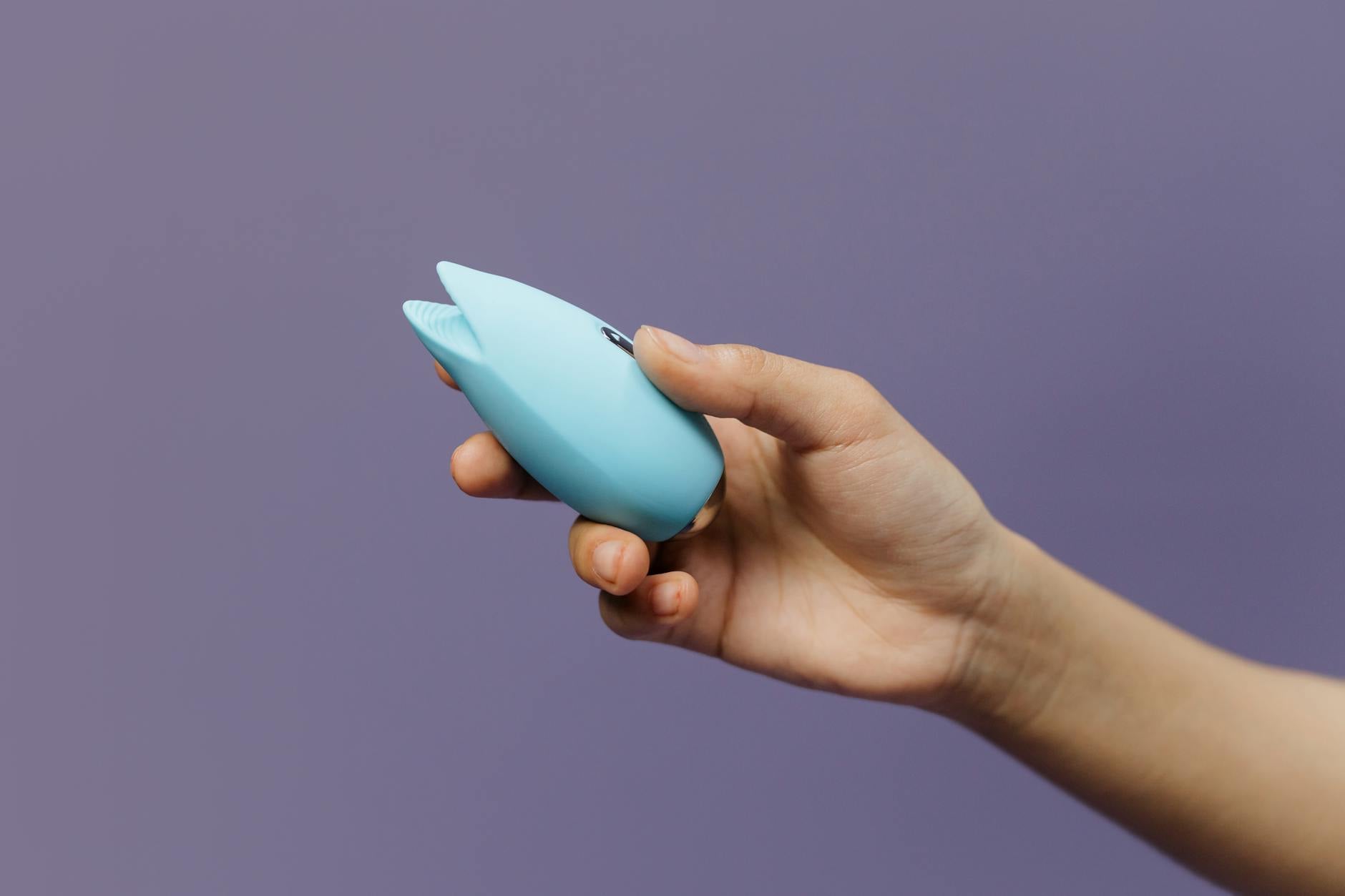
A good clitoral vibrator like the lemon vibrator does something important: it removes the performance pressure. You're not trying to pleasure yourself with your hand, which carries all this loaded history about what that "means." You're using a tool. It's clinical enough to feel acceptable, but efficient enough to actually work.
Lemon vibrators also have a distinct advantage for people struggling with shame: they work quickly. The suction stimulation technology reaches your nerve endings without the grinding friction of traditional vibrators. That means faster arousal, faster sensation, and less time spent in that vulnerable mental space where shame tends to creep in.
You're not lying there for 20 minutes worrying about whether this is okay. You're feeling good in 5.
Three mindset shifts that matter
But here's the catch: a vibrator can't rewire your nervous system alone. You need to shift some stories in your head first.
First: reframe solo sex as self-knowledge, not self-indulgence. You're not being selfish. You're gathering data. How does your body actually respond to touch? What patterns feel good? What doesn't? This information is valuable regardless of whether you ever share it with a partner. It's intelligence.
Second: notice the judgment and name it. When shame shows up, it usually whispers something specific. "This is weird." "You're being selfish." "You're too old for this." Name it out loud. Literally say it to yourself. Then ask: is that true? Probably not. Is it something I inherited? Almost definitely. Can I keep it anyway? No.
Third: separate solo pleasure from partner sex. They're different conversations with different purposes. Solo sex is about you learning your body and managing your own pleasure. Partner sex involves coordination and compromise. Solo sex doesn't have to earn its place next to partner sex. It just has to exist.
Practical setup to build confidence
I recommend these specific steps for anyone nervous about solo time:
First, create actual permission. Block 30 minutes on a day when you know you won't be interrupted. This isn't stolen time. It's scheduled, legitimate time that you've decided to claim. That sounds small, but it signals to your nervous system that this is acceptable.
Second, use something that feels clinical enough to feel "okay." This is where a lemon clitoral vibrator helps. It's a tool. It's designed for exactly this. There's no ambiguity about what it is or what it's for. That clarity can ease some of the weirdness.
Third, start with low intensity. Use setting 1 or 2 on your lemon vibrator. Let your body warm up to the sensation. You're not trying to sprint to orgasm. You're giving yourself permission to feel good without rushing.
Finally, separate the physical act from the mental narrative. Notice what you're telling yourself while you're using a vibrator. If you're in your head judging yourself, gently redirect. "That's not true. My pleasure matters. I'm allowed this." Say it until you believe it a little more.
What happens when you move past the shame
Honestly, the first time people actually settle into solo pleasure without guilt is often surprising. The sensation is different when you're not bracing against shame. Arousal builds faster. Orgasm feels fuller. You might actually enjoy yourself.
Beyond the immediate experience, knowing how to pleasure yourself confidently changes how you show up in relationships, if you have them. You're not dependent on a partner for stimulation. You know what works. You can communicate it. You're not performing someone else's fantasy of what you should want. You want what you want, and you can ask for it.
That's not selfish. That's actually the foundation of healthy intimacy.
When to reach out for more support
If shame around sexuality is blocking your life in bigger ways, talking to a therapist who specializes in sexual health can genuinely change things. Cognitive behavioral therapy is particularly effective for shame spirals. You don't have to white-knuckle your way through this alone.
If you're in a relationship and your partner is shaming your solo sex, that's a relationship issue worth addressing. You deserve a partner who supports your autonomy and your pleasure, even when it happens without them.
And if you're not sure whether a lemon vibrator is right for you, that's normal too. Try the buying guide to figure out what might work for your body and comfort level. No pressure either way.
FAQ: Solo pleasure, lemon vibrators, and shame
Is it normal to feel awkward about using a vibrator?
Completely normal. A lot of people, especially those who were raised with shame around sexuality, feel weird the first time. That feeling usually passes once you actually try it. Your nervous system adjusts. The weirdness becomes "this is just a thing I do to feel good" instead of "this is transgressive." Give yourself permission to feel awkward and do it anyway.
Can lemon vibrators actually help with shame, or is that just hype?
They help indirectly. They can't remove shame from your head, but they make solo sex fast, efficient, and surprisingly effective. That success can be proof that your body actually works the way you want it to. Which contradicts a lot of shame messages. Repeated proof that you're capable of pleasure is actually powerful.
What if I feel guilty even when I'm alone?
That's internalized shame. You've absorbed cultural messaging so deeply that you feel judged even without an audience. Notice when it happens and gently redirect your thoughts. "This is old programming. I'm allowed to feel good." It doesn't fix it immediately, but repetition gradually rewires those patterns.
Should I hide my vibrator if I'm embarrassed about it?
That's your choice. Some people need that privacy for their own comfort. Others find that hiding it reinforces shame. I generally recommend storing it somewhere you can access it without gymnastics, but that's practical, not moral. Do what feels right for your situation.
Does using a vibrator solo change how I respond with a partner?
Yes, usually for the better. You know your body. You know what you like. You're less dependent on a partner to figure you out. You can communicate. That typically makes partnered sex more satisfying, not less.
How long does it take for shame to fade?
It varies. For some people, one successful experience changes the narrative. For others, it takes repeated exposure to pleasure without judgment. A few weeks of regular solo time usually shifts something. And if shame is deep and pervasive, working with a therapist helps accelerate that process.
You deserve this
Your pleasure isn't selfish. It's not shameful. It's not something you've outgrown or something you need permission for. Your body is yours. How you use it is your choice. And if a tool like a lemon clitoral vibrator helps you claim that pleasure without guilt, that's not indulgence. That's self-respect.
Start small. Use a vibrator. Notice what happens to your shame when you actually feel good. Then repeat.