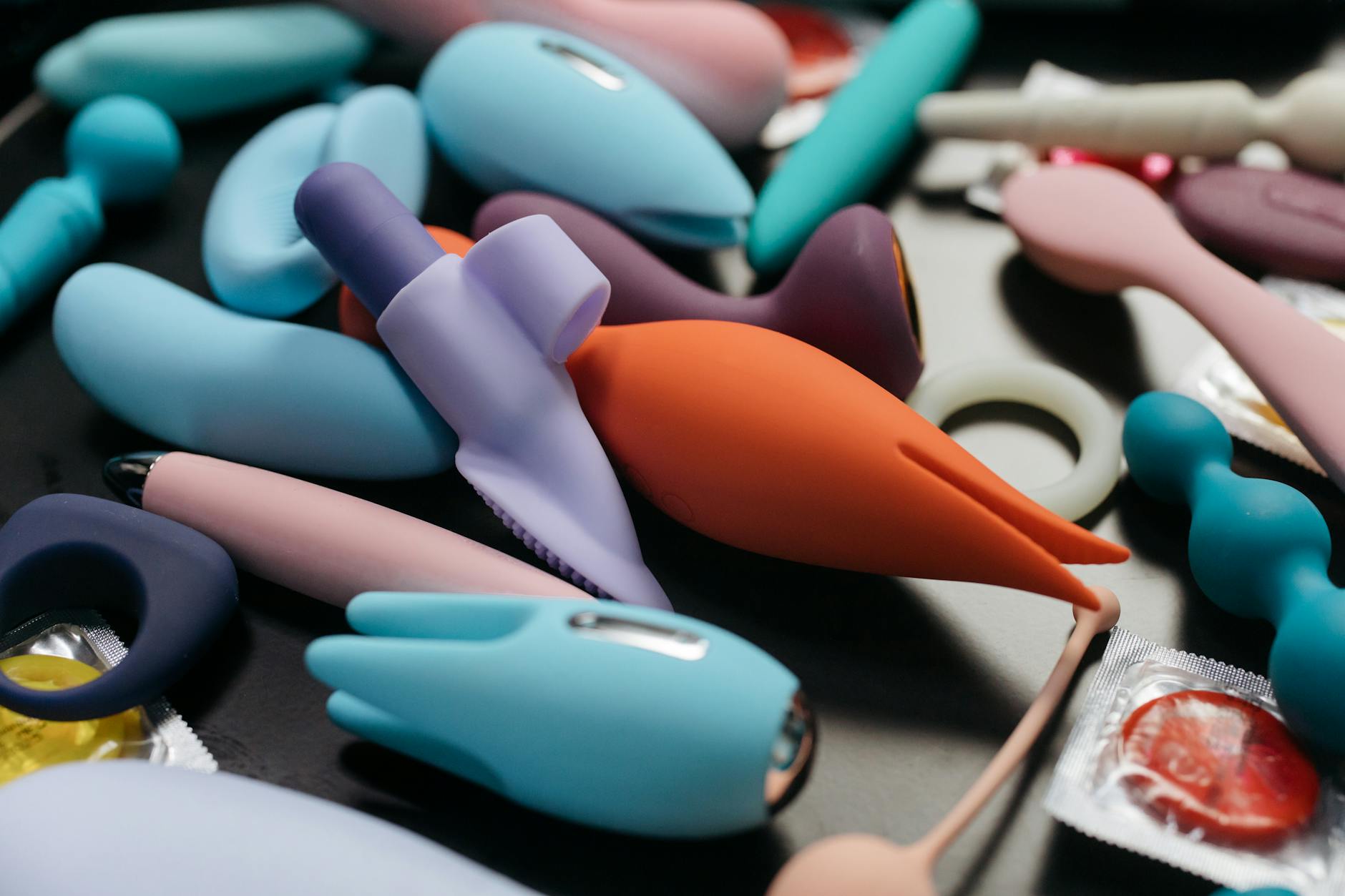
Let's talk about the thing nobody warns you about
Antidepressants save lives. They also, often without warning, flatten sexual response into something unrecognizable. You might feel better emotionally, sleep better, finally have space in your head again. And then you notice: arousal takes forever. Orgasms feel muted. Sensation dulls. Some people describe it as watching sex happen to someone else's body.
This isn't a personal failing. It's a well-documented side effect that affects 40 to 60 percent of people taking SSRIs, SNRIs, and tricyclic antidepressants. And because nobody talks about it openly, most people assume they're alone, or broken, or that the medication isn't right. Often it is right. The solution isn't ditching the drug that's keeping you stable. It's understanding what's happening and rebuilding sensation with tools like lemon clitoral vibrators that work with your body instead of against it.
Why antidepressants change sensation and arousal
SSRIs (selective serotonin reuptake inhibitors) work by keeping serotonin circulating in your brain longer. That's excellent for mood regulation. But serotonin also plays a role in sexual response. It dampens dopamine, which drives desire. It can delay or block orgasm entirely. And because SSRIs affect your whole nervous system, not just your brain, they can numb physical sensation and make your genitals feel less responsive to touch.
Tricyclic antidepressants do something different. They can interfere with blood flow to the genitals, which makes arousal physically harder to achieve. SNRIs sit somewhere in the middle, affecting both serotonin and norepinephrine, which controls vasoconstriction and arousal timing.
The timing matters too. Some people notice changes immediately. Others adjust after a few weeks. A few lucky people don't notice anything at all. But if you're reading this, you probably have.
The practical reality of medication-induced numbness
Here's what I hear most often in my practice: "I want to want sex again, but my body doesn't cooperate." Your partner might still be interested. You might still love them. Your brain might know that pleasure matters. But your clitoris feels like it's behind glass. Touch that used to make you gasp now barely registers.
This matters because pleasure isn't frivolous. It's part of how you stay connected to yourself and your partner. It's part of what makes you feel alive. And medication-induced sexual dysfunction is treatable. You don't have to choose between mental health and physical pleasure.
Why lemon vibrators work when sensation is muted
This is where lemon clitoral vibrators change the equation. Unlike traditional vibrators that rely on rapid vibration, lemon vibrators use pulsing suction that stimulates a wider area of nerve endings at once. When your nervous system is dampened by medication, this broader stimulation cuts through numbness more effectively than pointed vibration alone.
The suction creates sustained pressure and release that mimics the body's natural arousal response. For someone on antidepressants whose nervous system has been chemically muffled, this rhythm is often loud enough to break through.
I've worked with dozens of people whose sensitivity returned after switching medications or whose pleasure remained muted even after a dose adjustment. Most found that lemon clitoral vibrators brought back sensation faster than anything else they tried.
How to start rebuilding sensation safely
First, check with your prescriber. If sexual side effects are significant, sometimes a different antidepressant or a lower dose makes a real difference. Bupropion, for example, doesn't typically flatten sexual response the way SSRIs do. So does trazodone at low doses. Your doctor might also suggest taking your medication at night instead of morning, or timing intimacy for when the drug level dips. These conversations happen more often than you'd think, but only if you start them.
If you're staying on your current medication (which is perfectly valid if it's the right choice for your mental health), here's the sequence that tends to work:
Week one: Explore alone first. Use a lemon vibrator on low settings with plenty of lubricant. Don't have an orgasm as your goal. Your goal is sensation mapping. Where does it feel like anything? Where is still numb? Spend 10 to 15 minutes noticing, not chasing.
Week two: Increase intensity gradually. Move through the patterns. Most lemon clitoral vibrators have 4 to 6 settings. Start at one and spend a few sessions there before moving up. Your nervous system is learning to wake up again. Rushing this won't help.
Week three and beyond: Add duration and context. Once you're feeling something, extend your sessions. Add lubrication. Some people find that combining a lemon vibrator with partnered touch brings faster results because the variety of sensation helps your nervous system recalibrate.
Communication with your partner during this shift
If you have a partner, they need to understand this isn't about them. It's not a reflection of attraction or desire. It's neurobiology. The antidepressant that lets you feel present and stable also muted your genital nerves. That's the trade-off, and it's not your fault.
Talk about it before you're in the moment. Explain that rebuilding sensation takes time and experimentation. Ask them to be patient with your body's new pace. Some couples find that using a lemon vibrator together is actually a turn-on because it's collaborative. You're both problem-solving. You're both invested in pleasure returning.
If your partner is pushing for sex without checking in on this shift, that's a separate conversation. Your pleasure and comfort matter. So does their education about how medication affects bodies.
When to reconsider your medication
Not everyone should stay on an antidepressant that kills their sexuality. That's a legitimate concern to bring to your doctor if the side effects are severe and consistent after three months. But "severe" is worth defining. Slower arousal that responds well to a lemon vibrator is manageable. Complete anorgasmia or no sensation at all despite max effort might warrant a switch.
This isn't a choice you make alone. It's a conversation with your prescriber about whether another antidepressant might work with fewer sexual side effects, or whether a lower dose, a different timing, or an additional medication (like buspirone or bupropion) could help offset the numbness.
The timeline for sensation recovery
Some people regain full sensation within weeks of starting to use lemon vibrators intentionally. Others take months. A few find they need to switch medications to get back to their baseline. This variation is normal and frustrating, but it's important to know before you start.
What I've observed is that people who combine three things tend to recover faster: the right tool (a lemon clitoral vibrator), consistency (using it 3 to 4 times weekly), and emotional permission (letting go of the idea that pleasure should be spontaneous or easy right now). Your body isn't broken. It's compensating for a chemical change. With patience and the right approach, sensation comes back.
Managing expectations around orgasm
Orgasm might return slowly. Some people find their orgasms feel different even once sensation returns. Smaller. More concentrated. Delayed but intense. These variations are okay. An orgasm that takes 20 minutes isn't a failure if it gets you there.
For some on antidepressants, the complete block lifts only if the medication changes. For others, lemon vibrators unlock orgasm when vibration alone never did. The suction technology seems to bypass some of the neural dampening that SSRIs create. You won't know which camp you're in until you try.
The bigger picture: medication, pleasure, and self-care
Taking an antidepressant and rebuilding sexual pleasure aren't contradictory acts. They're both forms of self-care. One protects your mental health. The other protects your sense of embodiment and connection. You deserve both.
If you're struggling with medication-induced sexual dysfunction, start by naming it. Tell your doctor. Tell your partner if you have one. Then give yourself permission to experiment with tools like lemon vibrators that are designed to work with dampened sensation, not against it. Your body isn't broken. It's asking for a different approach.
People also ask
Can you stop taking antidepressants to get your sex drive back?
Stopping antidepressants without medical supervision can trigger withdrawal and a return of depression or anxiety. If sexual side effects are severe, talk to your prescriber about tapering or switching to a different medication, not stopping cold. Some antidepressants like bupropion and mirtazapine have fewer sexual side effects than SSRIs. A dose reduction might also help. But the decision to change medication is one you make with your doctor, not alone.
How long does it take to recover sensation after starting a lemon vibrator?
It varies widely. Some people notice increased sensation within days of using a lemon clitoral vibrator consistently. Others take weeks or months. The key is regular, patient use without pressure to orgasm. Think of it as rewaking your nervous system, not forcing an outcome. Most people see meaningful changes within four to six weeks of three to four weekly sessions.
Will a lemon vibrator work if I'm completely numb down there?
Lemon vibrators are more effective than traditional vibrators for medication-induced numbness because suction stimulates a broader area of nerves. But if you're completely numb, you might also benefit from talking to your doctor about whether a medication adjustment could help. Some people need both: a different antidepressant or an additional medication to restore sensation, plus a tool like a lemon vibrator to speed recovery.
Should I tell my doctor I'm using a vibrator to manage medication side effects?
Yes, if the conversation serves you. Your doctor needs to know that sexual dysfunction is affecting your quality of life so they can help troubleshoot. You don't need to describe the vibrator in detail. You can say: "I'm experiencing sexual numbness and reduced arousal on this medication. I'd like to explore options to manage it." That's enough to open a clinical conversation.
Can antidepressants permanently damage your ability to feel pleasure?
No. Sexual dysfunction from antidepressants is a side effect, not permanent damage. Sensation returns once the medication is adjusted or changed. Some people regain full function quickly. Others need more time or a different approach. But the nervous system can recover. Pleasure isn't lost permanently.
What if nothing works, including lemon vibrators?
If you've tried a lemon clitoral vibrator consistently for six weeks, talked to your prescriber about dose or medication adjustments, and nothing is shifting, it might be time to consider whether this particular antidepressant is the right fit for your whole life, including sexual health. Some people need to try two or three antidepressants before finding one that protects their mental health without devastating their sexuality. That's not failure. It's calibration.