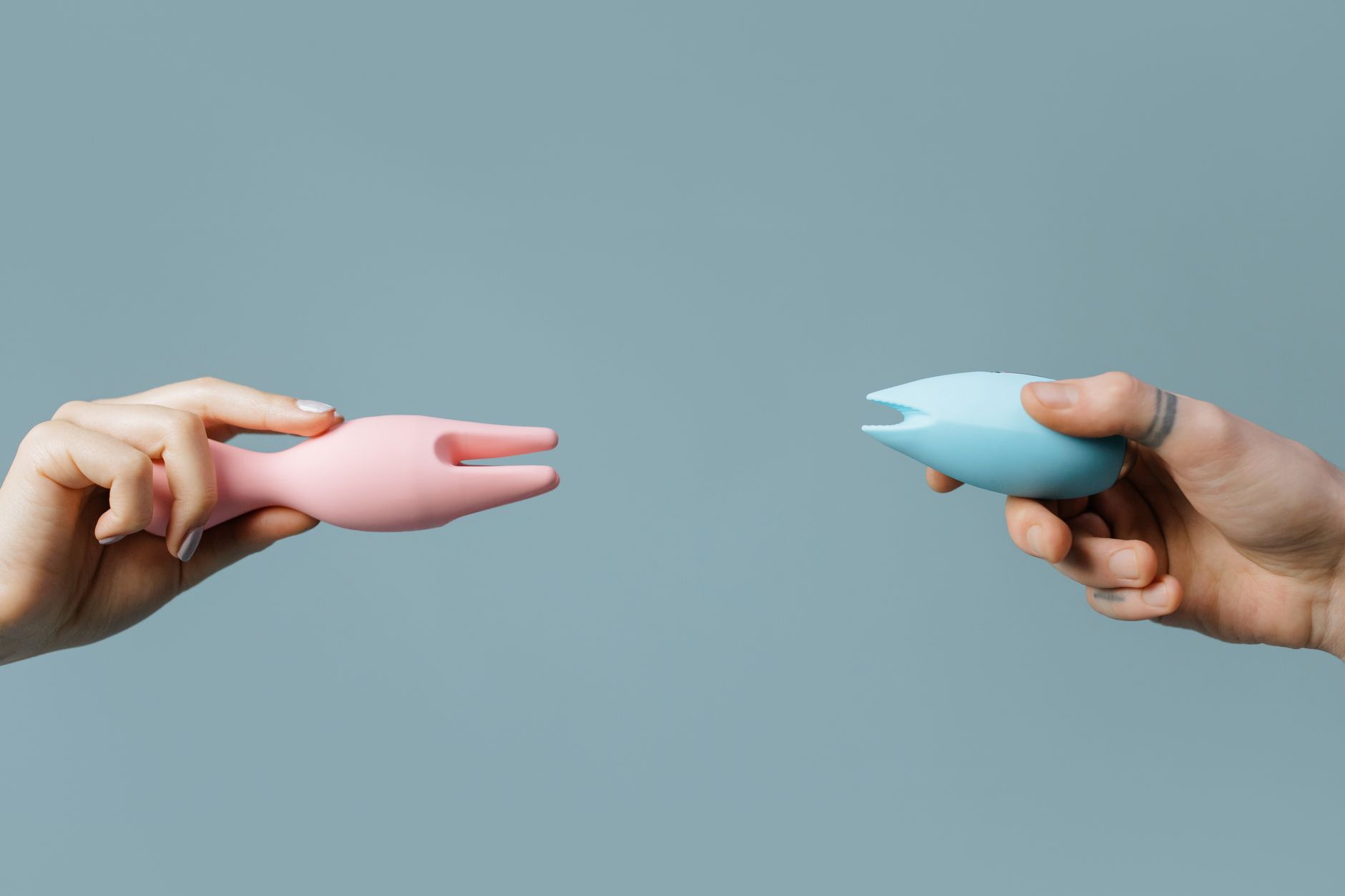
How to Use Lemon Vibrators When Orgasm Intensity Drops With Age
Let's be real. If your orgasms used to feel like a full-body event and now they feel more like a gentle shimmer, you're not alone. Most people notice a shift somewhere between their late 30s and 50s. The good news: it's not permanent, and it's not a sign you've broken anything.
Here's what's actually happening physiologically, and what you can do to rebuild that intensity.
What neurologically changes as you age
Your orgasm response relies on four main players: blood flow, pelvic floor muscle engagement, hormone levels, and neural sensitivity. As you age, all four shift.
Blood flow to the clitoris and vulva slows down gradually. This means arousal takes longer to build and peaks may feel less dramatic. Pelvic floor muscles lose tone and elasticity over time, especially if estrogen drops (which happens in perimenopause and menopause). The pelvic floor used to contract rhythmically during orgasm like a tight fist. Now it's more like a looser grip.
NeurologicallyI've noticed most clients don't realize that nerve sensitivity doesn't actually diminish with age. What changes is how you reach that threshold. The neural pathways are there. You're just climbing a slightly steeper hill to trigger them.
Hormone shifts matter too. Estrogen supports vaginal tissue thickness and clitoral blood flow. Testosterone, which people with ovaries produce in small amounts, fuels desire and orgasm intensity. When both drop, you lose some of that chemical amplification.
Why lemon vibrators and clitoral suction specifically help
Direct vibration works, but it has a ceiling. It stimulates surface nerves with mechanical movement. Clitoral suction goes deeper. It creates a pressure differential that engages a wider network of nerve endings, including deeper clitoral tissue that doesn't respond as well to simple vibration alone.
The Lem, which uses air-suction technology, is particularly effective for people experiencing age-related intensity loss because it doesn't rely on muscle tension or perfect blood flow timing. It's literally pulling blood into the clitoral tissue while creating rhythmic pressure. You get vasocongestion and nerve activation simultaneously.
Think of it this way: a vibrator is like knocking on a door. Suction is like opening a window and flooding the room with light. Lemon vibrators, specifically, reach tissue you can't reach with external vibration alone.
The warm-up is not optional
Here's where most people get frustrated and give up. They approach clitoral stimulation the same way they did at 25, expect the same result, and feel disappointed.
Budget 20 to 30 minutes before you even think about turning on the device. Start with touch. Use your hands or a partner's hands to build arousal gradually. This isn't foreplay in the traditional sense. It's priming the nervous system.
Why? Because arousal time directly affects orgasm intensity. The longer you warm up, the higher your baseline arousal, the more dramatic your peak will feel. At 25, you could hit that peak in five minutes. At 45 or 55, that baseline needs time to build. That's not a loss. That's a different rhythm.
Once you're genuinely aroused, then introduce the lemon vibrator. Start at intensity level one or two. Let the suction do the work for two to three minutes. The pressure will feel gentle at first. That's correct. You're priming deeper tissue.
Rebuilding the pelvic floor connection
Orgasm intensity depends on pelvic floor engagement. When those muscles are weak or tense, the orgasmic response is muted.
Before using your lemon vibrator, spend a few weeks doing gentle pelvic floor work. Kegels are useful, but the bigger issue for most people over 40 is actually too much tension, not too little. You're bracing unconsciously.
Try this: sit comfortably and place your hand on your lower belly. Breathe in and let your pelvic floor relax completely on the exhale. Don't squeeze anything. Just practice releasing. Do this for three minutes daily. The goal is to restore the ability to engage the pelvic floor deliberately, not chronically.
Once your pelvic floor can actually relax, it can engage fully during orgasm. That engagement is what creates the intense, rhythmic contractions you're missing.
Positioning and angle matter more now
At 25, you could orgasm in almost any position with enough stimulation. Now, positioning directly affects whether you can reach that intensity peak.
Find a position where you're fully supported and can stay still for 10 to 15 minutes without tensing your legs, back, or shoulders. Lying on your back with a pillow under your hips is ideal for clitoral stimulation with a lemon vibrator. Your clitoris sits at a natural angle, you're not burning energy stabilizing yourself, and your pelvic floor can stay relaxed until it's time to contract.
If you're using the vibrator with a partner, being on top lets you control the pressure and angle, which is crucial when intensity response is unpredictable.
Why multiple sessions matter
This is probably the most important thing I tell clients. You won't rebuild orgasm intensity in one session. Intensity is a pattern, not an event.
Your nervous system needs repeated practice to relearn how to reach that peak. Use your lemon vibrator three or four times a week for at least two weeks before you assess whether things are shifting. The first few sessions are recalibration. By week three, you'll notice the difference.
This is also why lemon clitoral vibrators work so well. The suction mechanism is consistent and reliable. It doesn't fatigue like your hands do. It can maintain pressure for as long as you need, which means your nervous system gets steady input and learns to respond.
Managing expectations around hormones
If you're in perimenopause or menopause and orgasm intensity dropped suddenly, you might need more than just technique changes. Hormone therapy, topical estrogen, or testosterone therapy can make a significant difference.
I always recommend talking to a menopause-trained clinician before assuming it's just age. Sometimes it is. Sometimes it's a medication side effect. Sometimes it's thyroid-related. The Lem and other lemon sexual toys are phenomenal tools, but they're not a substitute for medical evaluation if the change was sudden or severe.
When to use lower intensities intentionally
Here's a counterintuitive insight: cranking your lemon vibrator to max intensity doesn't rebuild intensity response. It can actually desensitize you faster.
Start every session at levels one or two. Spend five to seven minutes there, letting your body adjust and respond. Then gradually increase intensity if you want to. Your nervous system learns best with gradual escalation, not shock.
Many people find that sessions with lower, sustained intensity actually produce stronger orgasms than sessions with high intensity used frantically. It sounds backwards, but it's neurologically how your body works.
The role of mental presence
This is the part nobody wants to hear, but it matters enormously. Distraction dulls orgasm intensity at any age. At 50, it's catastrophic.
Put your phone across the room. Tell your household you're unavailable for 45 minutes. Close your eyes for at least the last ten minutes of stimulation. When your mind drifts, bring it back to sensation. Notice pressure, temperature, texture, rhythm.
Orgasm intensity is half physical response, half mental presence. You can't rebuild it while checking email.
Troubleshooting when intensity still feels flat
If you've been consistent for three weeks and nothing's changing, consider a few things.
First, are you actually relaxed? Most people think they are when they're braced against disappointment. Your pelvic floor knows the difference.
Second, could it be relationship-related? If you're using a lemon vibrator solo, pleasure issues are usually physical or neurological. If you're with a partner, disconnection will mute intensity even if your body is capable. This is where talking to someone trained in couples dynamics (like a Gottman Method specialist) helps tremendously.
Third, check your medications. Antidepressants, blood pressure meds, and antihistamines can genuinely affect arousal and orgasm intensity. Your doctor might have alternatives.
Finally, it's worth asking whether this is actually a problem. Some people reach their 40s and 50s and realize they never needed intense orgasms to feel satisfied. They prefer sustained pleasure or different kinds of sensation. That's not a decline. That's a preference shift. Honor it.
People also ask
Can lemon vibrators work if I have no sensation in my clitoris?
Partially. If you have true numbness (not just reduced intensity), start with a lemon vibrator at low intensities and be patient. The suction can help wake up nerve endings over time, but it usually takes weeks of consistent use. Check out how to rebuild sensation after numbness with lemon vibrators for more specific guidance.
Does age-related orgasm loss mean I'm becoming asexual?
No. Orgasm intensity is one aspect of sexuality. Many people report that desire, pleasure, and satisfaction actually increase after 40 even as orgasm pattern shifts. You might be experiencing a natural recalibration, not a loss.
Should I try a more intense toy if lemon vibrators aren't giving me what I want?
Not necessarily. Higher intensity can sometimes feel aggressive on age-shifted tissue. Compare different clitoral toy styles to find what matches your body now. Intensity isn't always the answer. Angle, pressure consistency, and warm-up time usually matter more.
How long does it take to notice intensity rebuilding?
Most people see shifts within two to three weeks of consistent use, but genuine rebuilding takes six to eight weeks. Your nervous system is learning a new pattern. Be patient with that process.
Can partners help rebuild orgasm intensity?
Absolutely. If you're with a partner, communication is everything. Tell them what you need. Tell them about the warm-up time. Show them how you use your lemon vibrator solo. Then incorporate it into partnered sex. The presence and attention of a partner who's invested in your pleasure is actually one of the strongest intensity boosters.
Is it normal for orgasm intensity to fluctuate even after it returns?
Yes. Stress, sleep, hormones, and how connected you feel to your partner all affect intensity. A strong orgasm one week and a gentler one the next week is completely normal. Track patterns over months, not individual sessions.
The bottom line
Orgasm intensity doesn't have to fade as you age. It shifts. Your nervous system needs different inputs. Your pelvic floor needs different support. Your warm-up needs more time. Lemon vibrators, specifically the kind with clitoral suction, are built for exactly this recalibration.
Consistency matters more than novelty. Presence matters more than intensity settings. And patience with your body's changing rhythm is the foundation of rebuilding what you thought you'd lost.