
The timing mismatch nobody talks about
Let's be real: arousal used to be faster. You got touched, your body responded. Maybe five minutes, maybe ten. Now it's thirty minutes, or forty-five, or sometimes it doesn't kick in at all in a single session. And the instinct is to think something's wrong with you. It isn't. Your hormones shifted, and your arousal timeline shifted with it.
This happens during the luteal phase of your cycle, after hormonal birth control changes, around perimenopause, after pregnancy, or during any major life transition that fiddles with estrogen and progesterone. What doesn't change: your capacity for pleasure, your desire, your ability to orgasm. What does change: the runway you need before takeoff.
Why arousal actually takes longer
Estrogen primes your nervous system for quick response. When estrogen drops or fluctuates, your body needs more stimulation, more time, and more consistency to build arousal. This isn't weakness. It's your nervous system being more cautious, which is completely normal.
Progesterone compounds this. High progesterone (like in the luteal phase or early pregnancy) is sedating and makes arousal harder to access. Your body is literally telling you to slow down. Fighting that message doesn't work.
The other piece: blood flow. Quick arousal relies on rapid vasocongestion in the clitoris and vulva. When hormones shift, that blood flow takes longer to arrive, and it arrives less dramatically. So the physical sensations that used to feel obvious now feel subtle.
Where clitoral vibrators actually help
This is where lemon vibrators and other clitoral toys become genuinely useful, not just fun. A suction-based toy like the Lem isn't trying to speed up your hormones. It's working around them.
Here's how: suction stimulates the clitoral complex in a way that doesn't depend on rapid blood flow or the nervous system being primed. It's consistent, repetitive input that your body can build on, even when arousal would normally take a long time to develop. You're not waiting for your body to "get ready." You're actively creating the conditions that let readiness happen.
The pattern matters too. Lower settings on lemon sexual toys give you gentle, sustained stimulation that builds slowly. Settings 1-3 on the Lem are perfect for this. You're not chasing intensity; you're creating a steady signal your body can respond to.
The setup that actually works
Timing alone won't fix this. You need three things working together.
Budget the time. This is not negotiable. If your arousal timeline is thirty minutes now instead of ten, you need thirty minutes carved out. No sneaking in a quickie while your partner is half-watching their phone. The mental pressure to "hurry up and get there" is actively working against hormonal arousal. Block time like it's a meeting you can't miss.
Start low, stay consistent. Switch on the Lem at setting 1 or 2. Not because you love it immediately, but because you're setting up a rhythm your nervous system can settle into. Spend 10-15 minutes here. Your arousal is building even if it doesn't feel dramatic. Then move up slowly if you want to. Consistency matters more than intensity when hormones are sluggish.
Get your environment right. Hormonal shifts often come with mental load. You're thinking about timing, about whether this is "working," about how long it's taking. That cortisol is killing arousal dead. Dim lighting, phone in another room, no clock-watching. Let your brain actually focus on sensation.
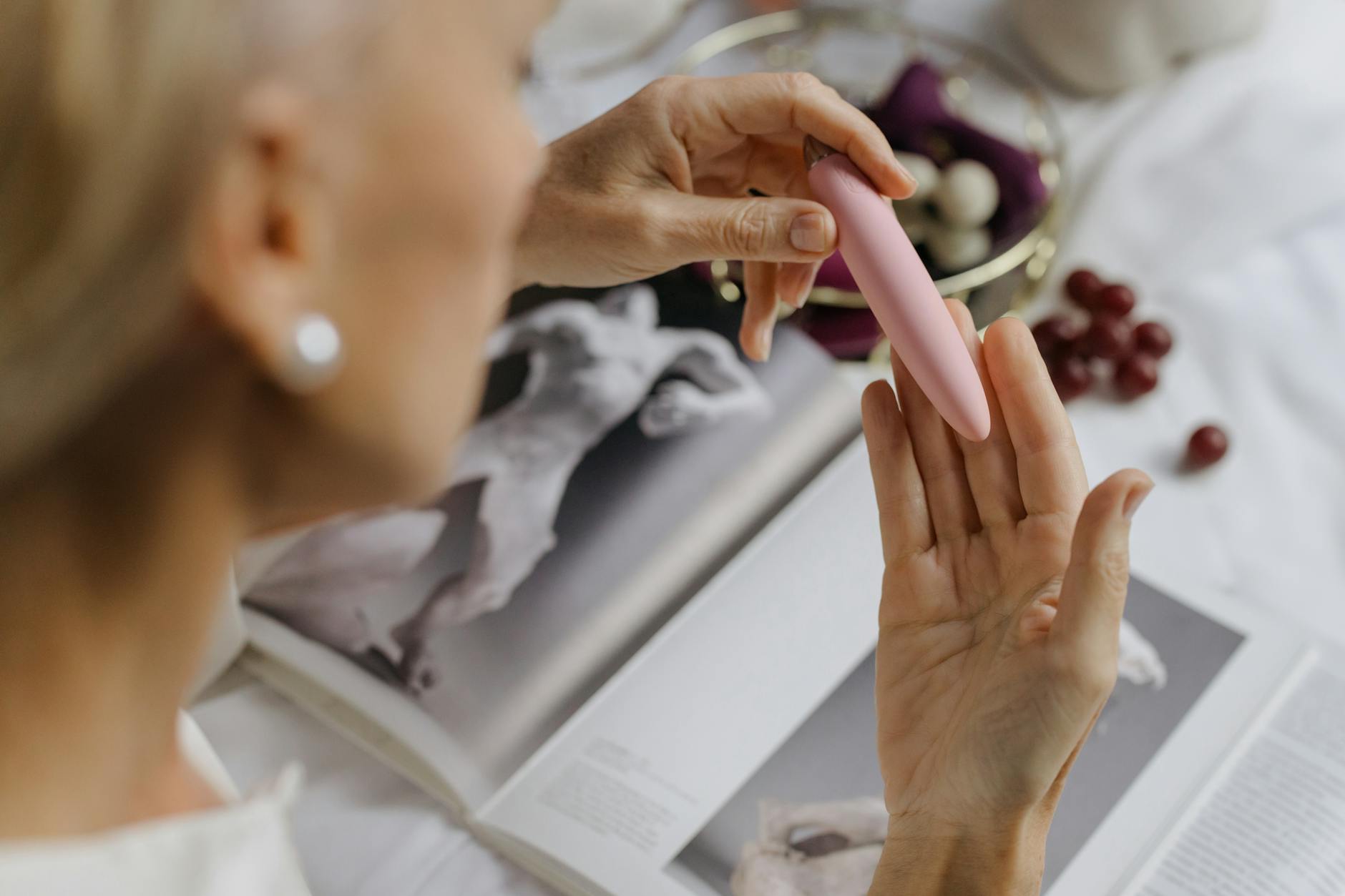
Photo by cottonbro studio on Pexels
What to do differently in solo sessions versus with a partner
If you're alone, the extended timeline is actually a gift. You get to explore sensation at your own pace without pressure. Use your lemon clitoral vibrator like you're learning your body again. Notice what patterns feel good, whether intensity is important, whether you want to add other stimulation. Thirty minutes of solo exploration beats five rushed minutes every single time.
With a partner, you need to say the timing has changed. Not "Sorry, I'm taking forever." But "My arousal is building more slowly right now, and I want to spend time with you getting there." Partners often misread slow arousal as lack of interest. Your job is to make the timeline visible. "Let's do twenty minutes of foreplay together before we do anything else" changes the whole frame.
Partners can also help by not touching the clitoris first. Slow arousal means you need general sensation first. Kissing, touch on the vulva and inner thighs, attention to other parts of your body. Then, once you feel arousal starting to build, hand them the lemon toy or use it yourself while they're kissing you or touching you elsewhere.
The role of sensation variety
One thing that helps slow-building arousal: novelty. Your nervous system wakes up when something changes. Start with the Lem at a lower setting. After ten minutes, add a vibrator elsewhere on your body. After more time, move the Lem to a different pattern. Add a partner's touch. Change positions. Your arousal doesn't need to be linear. It needs interest.
This is also why having different types of lemon sexual toys matters. A clitoral suction toy works differently than a vibrator. A wand creates different sensation than a bullet. Your body responds to variety, and variety can actually accelerate arousal even when your hormones are sluggish.
When to suspect it's not hormones
If your arousal timeline stretched over weeks or months rather than gradually shifting, or if you feel no pleasure response at all even with extended time and toys, something else might be going on. Thyroid issues, depression, relationship disconnection, medications, or lingering trauma can all flatten arousal independently of hormones.
The fix in those cases is different. You might need a doctor, a therapist, or a honest conversation with your partner. The Lem will still help, but it's not the whole answer. Don't let a clitoral vibrator become a band-aid for something bigger that needs real attention.
The permission piece
Honestly though, the biggest shift needed isn't physical. It's mental. You need to stop seeing slow arousal as a problem and start seeing it as information. Your body is telling you something about what it needs right now. Thirty minutes of pleasure is not a failure. It's a timeline. Your lemon vibrator isn't a workaround for a broken body. It's a tool that works beautifully with the timeline you actually have.
The women I work with often report that once they stopped fighting their arousal timeline and started planning for it, sex got better. Not faster. Better. More sensation, more orgasms, more presence. Your hormones didn't take that away. They just changed the rules. Use your lem vibrator, use your time, use your attention. The pleasure is still there.
People also ask
Q: Can I speed up my arousal timeline with vitamins or supplements? A: Some supplements like maca, ginseng, or L-arginine have mild effects on blood flow and arousal for some people, but they're not dramatic or reliable. The most effective "supplement" is actually time, consistency, and letting yourself use a clitoral vibrator without pressure. If you want to try something, talk to a doctor first, especially if you're on other medications.
Q: Should I use the Lem differently depending on where I am in my cycle? A: Absolutely. During your follicular phase (higher estrogen), you might need less time and lower settings feel more intense. During your luteal phase, you might need more time and higher settings to feel the same effect. Track what works and adjust. Your lem vibrator can be the same tool; your approach just shifts.
Q: Is it normal to need 45 minutes of stimulation now when I used to need 10? A: Completely normal, and way more common than you'd think. Hormonal changes, age, stress, relationship shifts, and medications all affect arousal speed. The issue is never that you're "broken." It's that your body's timeline changed and you haven't adjusted your expectations yet.
Q: Can using a clitoral vibrator make arousal take even longer? A: Not if you're using it right. If you're using it as a substitute for actual foreplay or partner attention, then yes, your body might become dependent on the intensity. But using it as part of a longer, varied approach actually trains your nervous system to respond faster over time because you're building arousal more consistently.
Q: What if my partner gets frustrated that sex takes longer now? A: That's a conversation you need to have outside the bedroom. Your partner's frustration is not your problem to solve by rushing. Their frustration is feedback that they need education about what's happening in your body and why extended arousal time matters. If they won't listen, that's relationship information worth having.
Q: Does extended arousal time mean I'm less attracted to my partner? A: No. Attraction and arousal timeline are separate things. You can be wildly attracted to someone and still need thirty minutes to build arousal. Confusing these two things creates unnecessary shame. Your timeline has nothing to do with how much you want your partner.
The real shift
Slow arousal isn't a bug in your body. It's a feature of where you are right now hormonally, and it's temporary. Your lemon clitoral vibrator isn't fixing something broken. It's working with your actual timeline, giving your nervous system the consistent input it needs to build pleasure at the pace your body has chosen. That's worth thirty minutes. That's worth the planning. That's worth everything.