Here's the thing about grip
You're trying hard not to try hard. That sentence sounds backwards, but it's exactly what happens when your body locks down during arousal. You grip your thighs together, tense your abs, clench your pelvic floor, and squeeze around whatever you're using for stimulation. It feels like you're doing something productive. Actually, you're strangling the very sensation you're chasing.
Most people don't know they're gripping until someone points it out. Or until pleasure stops happening altogether. The nervous system catches a signal it interprets as danger, and the whole system locks down like a car alarm. Then you're frustrated, thinking the toy isn't working, when really you're fighting yourself.
Why your body grips when you need sensation
Gripping happens for three core reasons, and understanding which one is yours changes everything.
First: you learned it from partners. If someone has ever rushed you, judged how loud you are, or made you feel like your pleasure was taking too long, your body learned to tighten up and get it over with. Gripping becomes a way to force an orgasm faster. It's efficient and anxious all at once.
Second: you're chasing intensity through force. Traditional vibrators often feel dull after a while, so you grip harder, thinking more pressure equals more sensation. It doesn't. It just cuts off blood flow and makes everything feel numb.
Third: you're genuinely anxious. Performance pressure, relationship stress, body image, fear of being interrupted, or plain old background anxiety all trigger a tension response. Your nervous system stays halfway to fight-or-flight, and arousal can't build from there.
The problem is that gripping and pleasure are biochemically incompatible. When your pelvic floor is clenched, blood can't flow freely to your tissues. Nerves that need space to fire get compressed. Orgasms feel shallow or take forever. You end up more frustrated than when you started.
Why lemon vibrators work differently
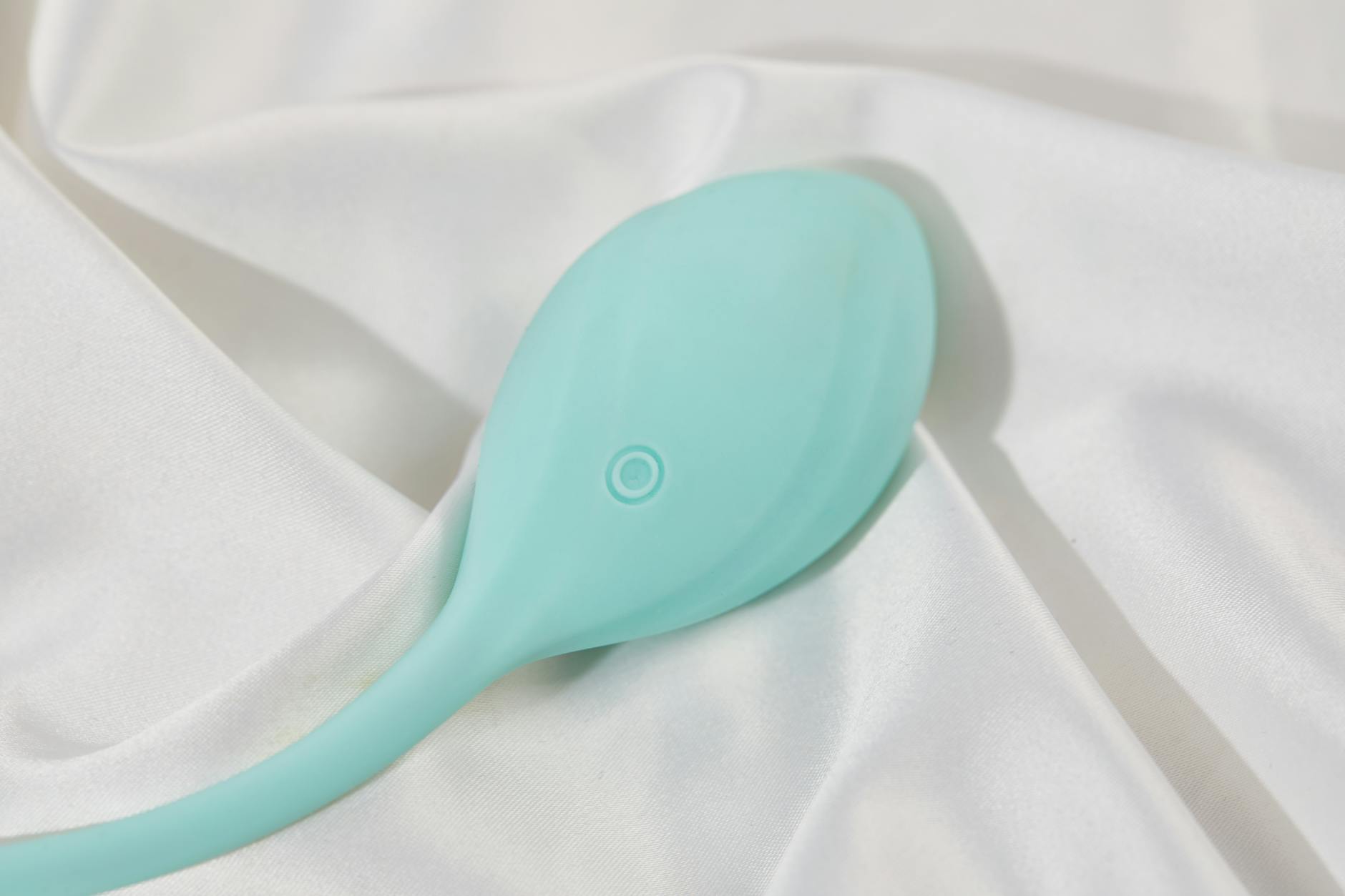
Lemon sucker vibrators use a completely different stimulation pattern. Instead of buzzing, they pulse. Instead of relying on pressure, they work through suction. This matters because suction doesn't reward gripping. It actually works better when your pelvic floor is relaxed.
Here's the physics: a lemon clitoral vibrator creates a gentle seal and pulses rhythmically. When you're gripped tight, that seal breaks. The sensation becomes inconsistent, and the stimulation stops working. Your body learns in about 30 seconds that gripping is counterproductive. Then you naturally relax.
That's not willpower. That's just feedback. Your nervous system figures out what actually works and stops wasting energy on tension.
Most people report that using a lemon vibrator is the first time they've experienced arousal without bracing themselves. It's like putting down a weight you've been holding so long you forgot you were carrying it.
Three ways gripping sneaks in (and how to catch it)
Tension isn't always obvious. You might not notice you're gripping until you check in with your body deliberately. Here's where to feel for it.
Your thighs. Press your palms against your inner thighs right now. Feel the muscle. During arousal, that muscle often fires hard without you asking. The reflex is real. One sign this is your pattern: you need your partner to hold your legs still, or you find positions where your thighs are pressed together feel instantly more intense.
Your belly. Lie on your back. Put one hand on your lower belly, one on your pubic bone. Now take a breath and notice what happens when you think about pleasure. Does your stomach pull in? Does the whole area go rigid? That's anticipatory gripping. It's protective, and it's very common.
Your pelvic floor. This is harder to feel, but you can sense it. When you're aroused, can you consciously relax your pelvic floor, or does it feel locked? Try this: next time you're warm and interested, see if you can do a slow kegel (squeeze), then let it go completely. If the release feels difficult or impossible, you're holding tension there.
Once you know where you grip, you know where to soften.
How to use a lemon vibrator to retrain your nervous system
You're not trying to force relaxation. You're creating conditions where relaxation feels better than tension, and your body figures it out naturally.
Start low and slow. Use the Lem or another lemon sucker on its gentlest setting. The goal is not intensity yet. The goal is to let your nervous system realize nothing is attacking you. Soften against the vibration instead of bracing.
Breathe. Actually. I know this is the most boring thing anyone says, but it works. When you hold your breath, your pelvic floor automatically clamps. Try breathing slowly in through your nose (5 counts), out through your mouth (7 counts). Your body can't stay in full fight-or-flight while you're breathing like that.
Notice when you grip and gently release. You'll probably still grip. That's not failure. The work is noticing it happening and thinking "oh, there's that pattern" and unclenching. Do this without judgment. You're retraining 20 years of responses. It takes practice.
Give yourself permission to take forever. Gripping often comes from the belief that pleasure should be fast. Drop that deadline. Spend 20 minutes on low settings just breathing and exploring. Your nervous system will start to trust that there's no rush.
Build intensity gradually. Once your body gets comfortable with relaxation during stimulation, you can turn up the Lem's intensity. But notice the difference now. You're building pleasure from a foundation of calm, not tension. The sensation is deeper.
When anxiety is the real driver
If your gripping is rooted in partner pressure, relationship stress, or genuine anxiety, a vibrator alone won't fix it. But it can be part of the fix.
Let's say your partner makes you feel rushed. Using a lemon clitoral vibrator solo first teaches your body what pleasure without pressure feels like. You build a reference point. Then, when you're with your partner, you can ask for what actually works (no rushing, lower intensity, more time). You're not making a request from theory anymore. You're asking for something you've felt.
Or you're dealing with intrusive thoughts during intimacy. Same principle. Spending time alone with a lemon vibrator, practicing the breathing and relaxation work, literally rewires your nervous system's stress response. You're building new neural pathways where arousal and safety coexist.
This takes weeks, not days. But it works.
When to see someone (and when not to)
If gripping is your only issue, and it's improving with a lemon vibrator and relaxation practice, you're probably fine going solo. If gripping is entangled with trauma, deep partner resentment, or you've never experienced pleasure without pain, talking to a therapist trained in somatic work makes sense. They can help you discharge the nervous system's protective patterns more directly.
There's no shame in both. Most people benefit from learning the body work themselves first (a vibrator is a brilliant teacher), then adding expert support if progress stalls.
The pleasure that comes after
Once your nervous system stops gripping, something strange happens. You feel more. Not because the vibrator is stronger, but because sensation can actually reach you now. People often report their first real clitoral orgasm happens in this phase. Not their first orgasm ever, but their first one that felt clear and deep instead of forced and shallow.
That's what's waiting on the other side of the grip. It's worth the practice to get there.
People also ask
Why does my pelvic floor tense when I'm aroused? Tension during arousal usually means your nervous system learned at some point that pleasure wasn't safe. Maybe someone made you feel rushed. Maybe you grew up with shame around pleasure. Maybe you've experienced pain during sex. Your body is protecting you by staying partially defensive. This is normal and fixable. It just takes repetition and safety. Using a lemon vibrator with consistent relaxation practice slowly rewires that response.
Can I retrain my nervous system to stop gripping on my own? Yes, absolutely. A lemon clitoral vibrator is actually one of the best tools for this because it gives you immediate sensory feedback. When you grip, the sensation stops or becomes inconsistent. Your body learns in real time that relaxation feels better. Breathing exercises and body scans (noticing where you hold tension) speed the process. If progress stalls after a few weeks, a somatic therapist can help, but most people see real change on their own.
Does gripping make orgasms harder to reach? Often yes. When your pelvic floor is clenched tight, blood flow to your genitals is restricted, nerves get compressed, and the whole system works against you. You end up needing more and more stimulation to reach orgasm because you're desensitizing yourself through force. Switching to a lemon sucker and relaxing changes this. Many people find orgasms become easier and more intense once they stop fighting their own body.
Should I tell my partner I've been gripping? If it's affecting your shared sex, yes, eventually. But you don't have to do it right away. Spend a few weeks learning your own body first with a lemon vibrator. Once you know what relaxed pleasure feels like, you can ask your partner for what actually helps: slower pace, lower pressure, more time, less talking. You're not blaming them. You're asking for conditions where you can actually feel something. Most partners respond well to that clarity.
Can traditional vibrators help with gripping, or do I need a lemon vibrator? A traditional buzz-style vibrator can work, but it's harder because buzzing actually encourages the gripping reflex. You naturally press harder into a buzzer to feel it more. A lemon sucker does the opposite. It rewards relaxation because the suction seal only holds when you're relaxed. That said, if you already have a traditional vibrator and want to experiment with gripping patterns, try using it on the lowest setting and deliberately staying relaxed. It's just slower progress than a lemon clitoral vibrator.
How long does it take to stop gripping? Most people notice a difference within 2-3 weeks of regular practice with a lemon vibrator. Real neural rewiring usually takes 6-8 weeks, though. You're not just learning a new behavior. You're teaching your nervous system a new safety baseline. Be patient with yourself. Progress isn't always linear, and that's fine.
References
Gottman, J. M., & Silver, N. (2015). The Seven Principles for Making Marriage Work. Harmondsworth: Penguin Books.
Van der Kolk, B. (2014). The Body Keeps the Score: Brain, Mind, and Body in the Healing of Trauma. Penguin Books.
Levin, R. J. (2003). The physiology of sexual arousal in the human female. Clinical and Experimental Obstetrics and Gynaecology, 30(2-3), 167-174.