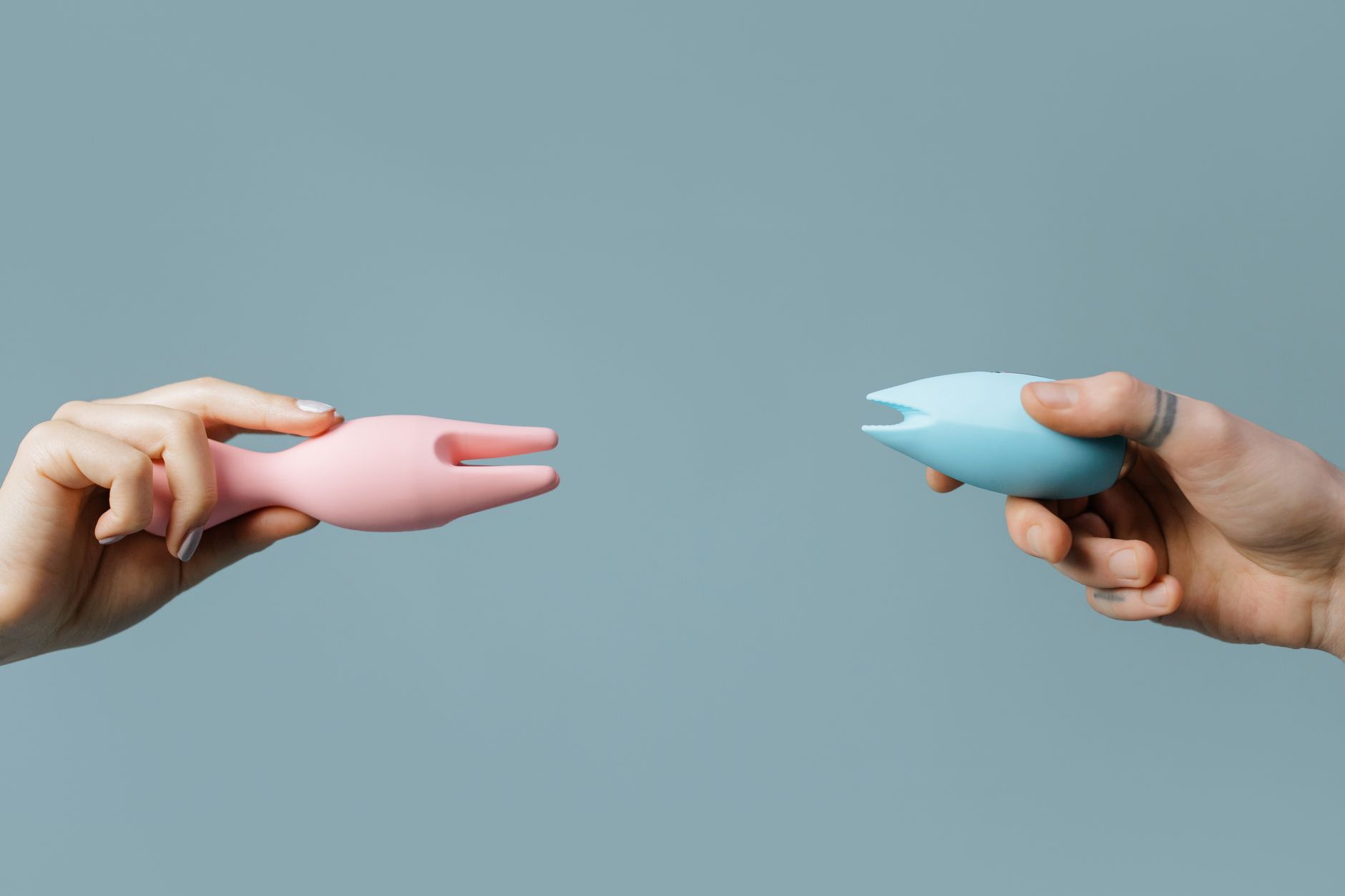
How to Use Lemon Vibrators When Foreplay Feels Rushed With a New Partner
Here's the thing about new relationships. Your partner is ready yesterday. You're still warming up mentally.
This is completely normal and also completely frustrating. New relationship energy doesn't come with a built-in timer that syncs with your arousal timeline, and the last thing you want is to kill the mood by saying "slower please" three minutes in. But rushing your body doesn't work. Arousal happens at its own pace, and when you're with someone new, that pace often takes longer because your nervous system is still learning to feel safe.
The good news: lemon vibrators solve this equation. They let you get aroused at your speed while keeping things hot for both of you. You're not asking your partner to wait around. You're both getting pleasure now.
Why new partner energy speeds things up
When you first start sleeping with someone, your body is in a state of heightened alertness. Your brain is still cataloging everything about them. Are they safe? What do they like? What do they think of my body? That kind of active mental work slows arousal down.
Your partner, on the other hand, is probably fully aroused by the time you've finished getting undressed. Novelty is a huge turn-on for new relationships. They've built you up mentally for weeks. Your brain is still catching up.
This gap is real and it's not a sign that anything is wrong. It just means you need a different strategy than what works when you've been with someone for years.
The timing mismatch is about nervous system regulation
When you're with a familiar partner, your parasympathetic nervous system (the relaxed one) is already activated just from being around them. Your body knows you're safe. With someone new, your sympathetic nervous system (the alert one) is running the show.
It takes time to shift out of that vigilant state into a relaxed, receptive one. Some people take 5 minutes. Some take 20. Both are normal. If your partner wants to move into penetration and you're not at full arousal yet, you're literally asking your nervous system to do something it's not ready for.
Lemon vibrators cut through that nervous system gap. A clitoral vibrator works directly on nerve-rich tissue, which means you can bypass the mental warm-up and go straight to physical arousal.
How lemon vibrators solve the timing problem
Here's the setup that works:
Your partner touches you, you touch them, things get hot. When they're ready to escalate and you know you need more time, introduce the vibrator. This does three things at once.
First, it keeps the momentum going. You're not asking anyone to stop or slow down. You're both still engaged.
Second, it gives your nervous system permission to relax. There's no pressure to "catch up" because now there's a tool doing the work. You can focus on sensation instead of performance.
Third, it feels incredible. A lemon clitoral vibrator uses suction stimulation, which works differently than friction. It pulls gently on the tissue rather than rubbing it. For a lot of people, especially when they're nervous, suction feels less intense and more pleasurable than direct contact.
The practical setup when foreplay feels rushed
Talk about it first, before you're in the moment. Say something like: "I get aroused slower than you. I want to use a vibrator sometimes so we both feel good at the same time." That's it. No apologies, no explanations.
When you're together, let foreplay happen naturally. When your partner escalates, use the vibrator at that moment. You don't need permission or a special announcement. Just reach for it.
Start with the vibrator on a lower intensity pattern. Most lemon vibrators have 3-5 intensity settings. Begin at pattern 1 or 2, not the strongest. You want sensation, not overwhelming intensity.
Position it so the suction cup covers your entire clitoral area, not just the tip. The lemon vibrator is designed to seal against your skin, which is part of why it works so well. It's not hovering. It's making contact.
Keep your partner involved. They can touch you elsewhere while the vibrator does its work. They can kiss your neck, your breasts, your inner thighs. Physical closeness matters more than penetration in this moment.
The arousal acceleration pattern
Once you start using the vibrator, your arousal climbs faster. This isn't magic. It's neurology. Direct stimulation to the clitoris activates the same pleasure centers that manual touch does, except it's consistent and sustained.
You'll likely feel yourself getting wet faster. You'll feel more muscle tension building in your pelvic floor. Your breathing will shift. These are all signs that your nervous system is downshifting from alert to aroused.
This typically takes 3-5 minutes with consistent vibrator use, compared to 15-20 minutes of foreplay alone when you're nervous.
When you feel ready for more, you can ask your partner to enter, or you can ask them to keep doing what they're doing. You're in control now, not your timeline.
The communication piece matters more than the toy
Using a lemon vibrator when you're with someone new only works if you've talked about arousal timing ahead of time. If you spring a vibrator on your partner without context, they might feel like you're signaling something about their ability to turn you on.
They're not. You need more time. That's not a reflection on them.
If your partner has hesitation about toys, start smaller. Ask them to watch you use it on yourself first. Let them see how much you enjoy it. Some people need to understand that vibrators aren't replacements. They're tools that let you sync up physically.
You might also say: "This helps me get there faster, so we can both have more fun together." That's true and it frames the vibrator as something that serves both of you.
When to use the vibrator throughout the session
You don't have to use it only at the beginning. Some people use it during foreplay to get aroused, then take a break during penetration. Some use it the whole time. Some use it at the end to reach orgasm.
Your partner can also hold and control the vibrator while you're together. This can actually feel more intimate than you doing it yourself, because you're both focused on the same goal.
Try different timings and see what feels best. There's no right way.
The longer-term pattern
Once you've used lemon vibrators a few times with a new partner, something shifts. Your nervous system starts to recognize them as safe faster. You might find you need less vibrator time as the relationship progresses and you feel more comfortable.
Or you might find you love using them and want to keep it as part of your routine. That's equally valid.
The point is to solve the immediate problem. New relationship energy is wonderful. Your arousal timeline is your body's way of asking for safety and presence. A clitoral vibrator lets you have both.
FAQ
Does using a vibrator with a new partner change how they perceive me?
Not in any way that matters. If someone responds poorly to you using a toy, that's information about their maturity level, not about you. Healthy partners understand that your body works the way it works and that tools that help you feel good are a gift to both of you.
What if my partner thinks the vibrator means I'm not attracted to them?
This worry comes up a lot and it's worth addressing directly. Tell them: "I'm attracted to you. My arousal is slower to build because I'm new with you and I'm processing a lot. The vibrator helps my body catch up to my mind. It's not about you." If they still can't hear that, that's a compatibility question, not a vibrator question.
Is it normal to need a vibrator with a new partner but not with a longtime partner?
Completely normal. With someone new, your nervous system is in a different state. You don't have years of familiarity and trust built in. As time passes and you feel safer, you might need less external stimulation. Or you might just enjoy vibrators as part of your routine. Both patterns are common.
How do I bring up using a lemon vibrator without making it awkward?
Do it when you're not in the moment. Say something like: "I've been thinking about incorporating toys into our sessions. I get aroused slower with new partners, and I want us both to feel good. Would you be interested in trying that?" Keep it practical, not vulnerable or performative.
What if they've never used a vibrator with a partner before?
Then you're introducing something new together, which is actually a nice bonding experience. You're collaborating. You're both learning. That's intimacy in a different form.
Can I use a lemon clitoral vibrator if I'm sensitive about my body with a new partner?
Yes. In fact, many people find that using a vibrator reduces performance pressure. You're not focused on whether your body looks right or feels right to your partner. You're focused on sensation. That can actually make you feel less self-conscious, not more.