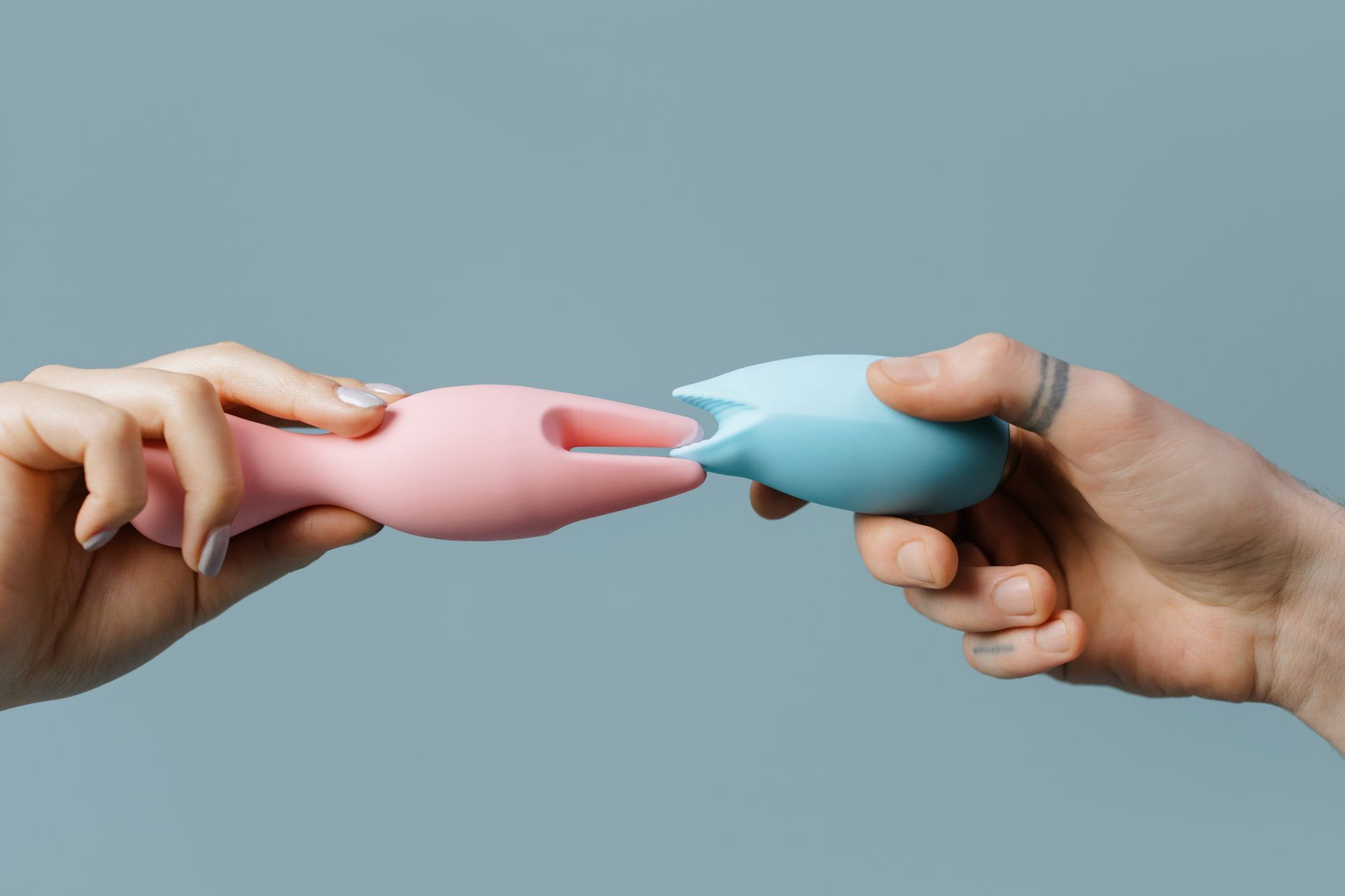
Let's acknowledge what this moment actually is
Desire doesn't always move in a straight line. Sometimes it vanishes for months or years, and then one day it shows up again. You might not recognize it at first. It could feel like a whisper, or maybe an unexpected moment of connection with a partner, or simply your own body reminding you that pleasure still matters. Whatever brought you here, you're not starting from scratch. You're restarting, which is different.
Restarting after a long absence of sexual desire creates a specific kind of vulnerability. Your body feels less familiar. Your confidence is softer. And if you're reaching for something like a lemon clitoral vibrator for the first time in years, the whole experience can feel weirdly exposing.
That's exactly why you need a practical, shame-free approach. Not motivation or philosophical language about self-love, but actual strategies to ease back in.
Why desire disappears, and why it returns
Desire goes dormant for real reasons. Trauma, depression, medication, grief, chronic stress, a relationship that killed it, or simply years of putting everyone else first. Sometimes it's physical. Sometimes it's entirely psychological. Usually it's both tangled together.
When it returns, it's because something shifted. A breakup, a new partner, therapy, a change in medication, or just enough time passing that your nervous system finally feels safe again. Your body is essentially asking for permission to feel good, and that's worth honoring.
The gap between "desire is absent" and "desire is returning" is where most people get stuck. They expect to jump straight back into pleasure like they never left. When that doesn't happen, shame shows up: "Why do I feel awkward about my own body now?" "Why does this feel harder than before?" "Am I broken?"
You're not. Your body is just being cautious, which is smart.
Why lemon vibrators work particularly well for reconnection
Lemon clitoral vibrators, sometimes called lemon suckers, use air-pulse technology instead of traditional vibration. This matters when you're rebuilding sensation after a long break.
Traditional vibration is direct and intense. For someone reconnecting to pleasure, that intensity can actually shut things down. Your nervous system might interpret it as "too much, too fast," and the whole experience becomes about managing sensation rather than enjoying it.
Air-pulse stimulation (the kind you get with a lem vibrator) feels different. It's rhythmic but less jarring. It stimulates the thousands of nerve endings in your clitoris without the same mechanical pressure. Many people describe it as more dynamic and less numbing than standard vibration. That matters when you're relearning what pleasure feels like in your own body.
Also, there's something psychologically useful about a tool that looks playful rather than clinical. A lemon sexual toy shaped like a piece of fruit is weirdly permission-giving. It doesn't carry the same weight as something that screams "sex toy." That sounds silly until you realize how much shame can show up in those first moments.
How to actually start, step by step
First: solo exploration, no partner present. This is non-negotiable. You need to remember what your own pleasure looks like before you layer someone else's presence into it. Set aside 20-30 minutes when you're alone and have zero risk of interruption. Your nervous system needs to know it's safe.
Second: set the environment for calm, not seduction. No candles or rose petals or pressure to feel romantic. That's extra work right now. Comfortable temperature, clothes you can move easily in, maybe a blanket. The goal is comfort, not mood.
Third: start with touch before you touch yourself. Spend 5-10 minutes just noticing your body. Run your hands over your arms, your legs, your belly. Get reacquainted. This is not foreplay. It's a conversation with your own skin.
Fourth: introduce the lemon vibrator slowly. Hold it. Look at it. Feel its weight. Turn it on at the lowest setting (usually pattern 1 or 2 on most lem vibrators) without using it yet. Let your brain adjust to the sound and sensation of the device in your hand.
Fifth: apply it to the clitoral area very gently. Not necessarily directly on the clitoris. Start on the outer lips, the mons pubis, the area around the clitoris. Move slowly. The point is information gathering, not climax chasing. Stay at low intensities for the first few sessions. Your sensation will return faster if you don't overwhelm it.
What to expect in those first reconnection sessions
You might feel numb. That's normal after months or years away. Numbness is not permanent, and it doesn't mean you're broken. It typically takes 3-5 sessions before sensation starts waking up.
You might feel anxious. That's your nervous system checking whether it's actually safe to feel good. Anxiety often decreases as your body realizes nothing bad happens when you experience pleasure. Stay with it.
You might not orgasm, and that's fine. Orgasm shouldn't be the goal right now. Sensation, comfort, and the experience of your body feeling good again is the goal. Orgasm usually comes later, when your nervous system has fully settled.
You might feel emotionally tender afterward. Reactivating pleasure can unlock feelings you've been carrying. That's okay. It's not a sign you're doing something wrong.
When and how to involve a partner
If you have a partner, resist the urge to bring them in immediately. Give yourself at least a week of solo sessions first. You need baseline confidence in your own pleasure before you add their presence and energy into the equation.
When you do bring a partner in, tell them what's happening. "I'm relearning my body," or "I'm taking this slowly," is enough. You don't need to narrative the whole history. What you do need is a partner who understands that you're not looking for performance right now. You're looking for presence and patience.
Let them watch, if that feels comfortable. Let them ask what you want. But resist their urge to "help" by touching you in specific ways. You're the expert on your own body. They're the witness.
If you're partnered and you want to use a lemon clitoral vibrator together, start with you controlling it. You know the sensitivity level, the intensity, the rhythm. Having that control helps your nervous system stay regulated. Later, you can explore other dynamics.
Timeline expectations and what's normal
Most people report noticeable shifts within 2-3 weeks of consistent use. That means using a lem vibrator 2-4 times a week, solo, no pressure.
Sensation usually returns before desire fully does. You might notice the physical response is sharper before you feel truly interested again. Both matter. Keep going.
Orgasms typically feel different when you're reconnecting. They might be smaller, less intense, shorter, or arrive from unexpected spots. That's not worse. It's just different. Your body's pleasure map has shifted, and that's actually interesting to explore.
If you're not noticing any shift after 4-5 weeks, check in with yourself. Are you actually relaxed during these sessions, or are you performing? Is there something emotionally blocking you that you haven't addressed? Sometimes pleasure requires a conversation with a therapist or your doctor before a vibrator can help.
The shift from "relearning" to "actually wanting it again"
At some point, something flips. Usually it happens quietly. You find yourself thinking about pleasure during the day. You look forward to your session instead of approaching it like a chore. You stop checking off a box and start actually being present.
That's when you can start experimenting. Try different patterns on your lem vibrator. Try different positions. Try longer sessions. Bring a partner in if you want to. Start using the tools alongside a partner's touch.
But understand what's happened here. You didn't "fix" anything. You simply reestablished the relationship with your own body. You reminded yourself that pleasure is available to you. You proved that wanting something for yourself is not selfish, it's necessary.
That shift changes everything.
Desire returning after absence isn't a restart from zero. It's a reconnection with a part of yourself that was always there, just waiting.
People also ask
How long does it take for sexual desire to return after a long break?
There's no universal timeline. Some people feel shifts within weeks. Others take months. It depends on what caused the absence. If it was situational (a stressful job, a difficult relationship), desire often returns relatively quickly once that situation changes. If it's connected to trauma or depression, it might take longer and might benefit from professional support alongside physical exploration. The key is consistency and patience without pressure.
Is it normal to feel awkward using a vibrator again after years away?
Completely normal. Your body and your relationship with pleasure have both changed. That awkwardness often eases after the first 2-3 sessions. You're not supposed to feel confident immediately. Awkwardness is just unfamiliarity, and unfamiliarity disappears with gentle, repeated exposure.
Can a lemon clitoral vibrator help if I'm still numb or disconnected from sensation?
Yes, but patience matters. Numbness from extended sexual absence usually responds well to consistent, gentle air-pulse stimulation. Start at the lowest intensities. Your nervous system is cautious, and it needs proof that sensation is safe before it fully wakes up. Most people report noticeable sensation shifts within 3-4 weeks of regular sessions.
What if I use a lem vibrator but still don't orgasm after reconnecting?
Orgasm isn't the metric of success right now. Sensation, comfort, and the experience of your body feeling alive again is the win. Orgasm often follows once your nervous system has fully settled and your confidence returns. If you've been using a lemon vibrator consistently for 6-8 weeks and nothing's shifting, that's when a conversation with a therapist or healthcare provider might help.
Should I tell my partner I'm using a lemon vibrator to reconnect to pleasure?
If you're in a committed relationship, yes. Not as a confession, but as information. "I'm working on reconnecting to my body, and I'm using a vibrator to help with that." Most partners appreciate honesty and a chance to understand what you're doing. If your partner reacts poorly, that's a relationship conversation worth having separately from your pleasure exploration.
Is it okay to explore with a lemon sexual toy if I'm still healing from trauma?
It depends on the trauma and your healing stage. Solo exploration with a device you control fully is usually safer than partnered sexual activity while you're early in trauma recovery. But check in with a trauma-informed therapist first. They can help you figure out what pace is right and what barriers might show up. A lem vibrator can be part of your healing, but it shouldn't be your only strategy.
The real work starts now
Using a lemon vibrator is the easy part. The harder part is being patient with your body, showing up consistently even when you don't feel like it, and choosing yourself without guilt.
Your pleasure matters. The fact that it went away and is coming back doesn't make it less worthy of attention. If you're struggling with the emotional weight of rekindling desire, or if something deeper is blocking you, consider talking to a professional. A therapist who works with sexuality can help you untangle what's underneath.
Start slow. Stay curious. Let your body surprise you with what it's still capable of feeling.
If you have questions about how to use a lemon clitoral vibrator safely, or if you want support navigating this reconnection, we're here. Reach out to Try Lemon Sex Toy.
Sources
Brotto, L. A., & Savin-Williams, R. C. (2019). "Gendered sexual development: A critical review of the literature." Archives of Sexual Behavior, 48(5), 1385-1393.
Meston, C. M., & Frohlich, P. F. (2000). "The neurobiology of sexual function." Archives of General Psychiatry, 57(11), 1012-1030.
Weiss, R. B. (2015). "Sex addiction and the impact of compulsive sexual behavior: A literature review." Sexual Addiction & Compulsivity, 22(2), 108-125.
Perelman, M. A. (2006). "A new combination of systemic sex therapy designed for rapid ejaculation and orgasmic inhibition." Journal of Sex & Marital Therapy, 32(4), 325-339.