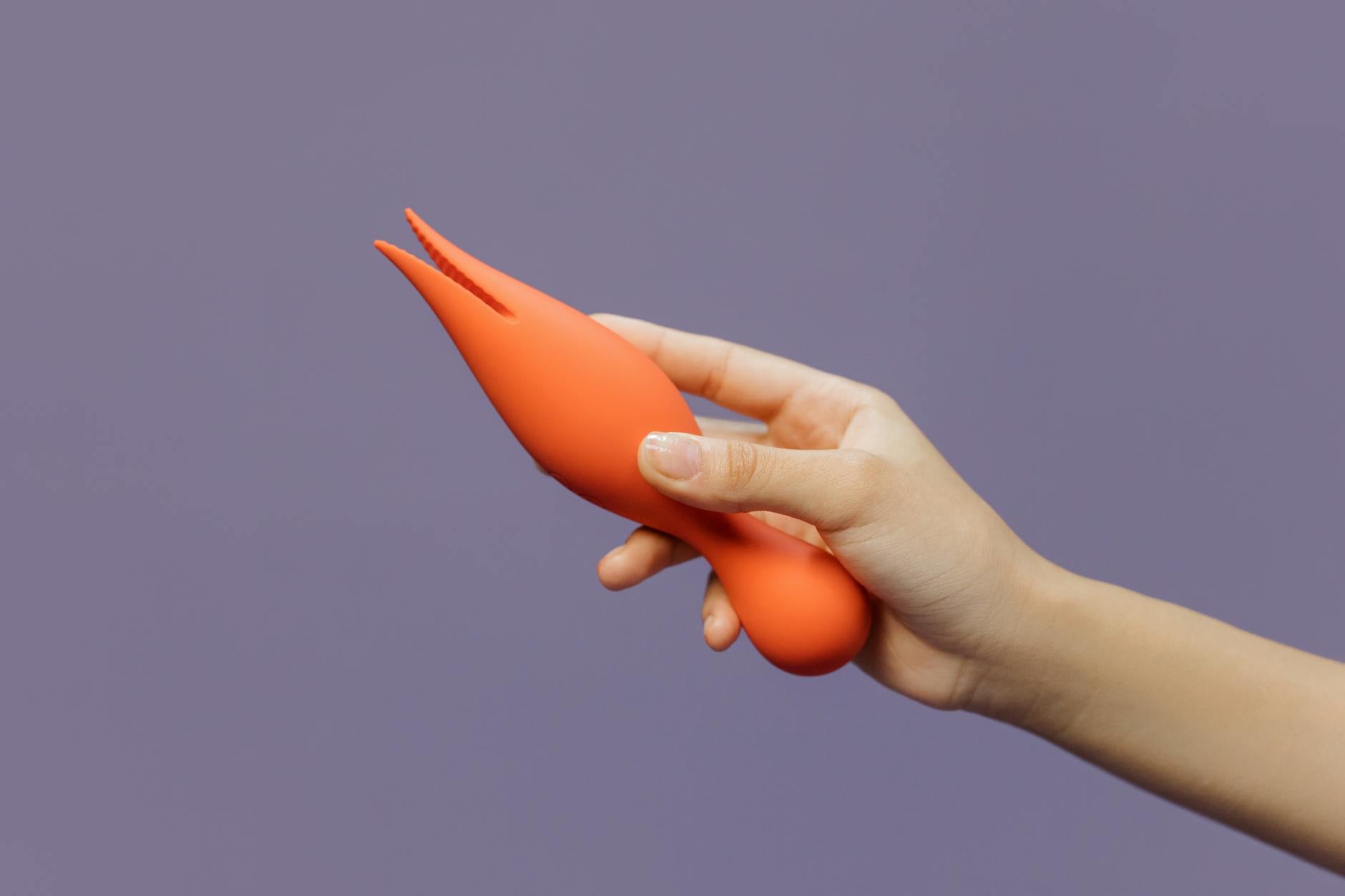
Let's talk about the burn
You know the feeling. You're using a clitoral vibrator, things feel good, and then somewhere between one breath and the next, good becomes uncomfortable. Not the good kind of intense. The kind that makes you pull away or flinch or wait for the sensation to settle. This is clitoral overstimulation, and it's way more common than you'd think.
The confusing part? It doesn't mean you're broken. It doesn't mean the toy is wrong. It means your body is doing exactly what it's supposed to do. The clitoris has roughly 8,000 nerve endings concentrated in a tiny area. When stimulation intensity or duration exceeds what your nervous system can process in that moment, it registers as pain instead of pleasure. That's not dysfunction. That's your body's safety system working.
Why the clitoris gets overwhelmed
Think of the clitoral nerve like a volume knob on a speaker. When stimulation is at level 3, it feels great. At level 5, it's intense but good. At level 8, your whole system goes into protective mode and starts to interpret the signal as threat instead of pleasure.
Here's what makes overstimulation tricky: it's not always about the toy's power. A lemon clitoral vibrator running at medium strength can feel amazing one day and overwhelming the next. Why? Because sensitivity shifts based on several things.
Arousal state matters. If you're using a lemon sexual toy when you're not fully turned on yet, the clitoris is more sensitive to raw intensity. The nerve endings need time to acclimate to stimulation. Jump straight to high-intensity suction or vibration before arousal builds, and you're asking your body to process too much too fast.
Hydration and pelvic floor tension change the game. When you're dehydrated or your pelvic floor muscles are chronically clenched, tissue becomes more reactive. Even gentle stimulation can feel sharp. This isn't about your toy. It's about what's happening in your body underneath.
Hormonal timing shifts sensitivity dramatically. If you menstruate, the clitoris is significantly more sensitive in the days leading up to your period. Some people notice the clitoral hood swells slightly, bringing more tissue into direct contact with the vibrator. Others find that heightened vascularity makes every sensation feel amplified. Same lemon vibrator, completely different sensation.
Repetitive use in a short window fatigues nerve endings. If you've been stimulating the same spot for 20 minutes straight, those nerve endings start to send mixed signals. The clitoris essentially gets tired. Switching stimulation type, location, or taking a break resets the system.
How lemon clitoral vibrators help when overstimulation is the problem
Lemon vibrators, including the focused suction-based design, are actually excellent tools for managing overstimulation because of how they work mechanically.
Unlike traditional vibrators that rely on rapid back-and-forth movement against the tissue, suction-based lemon adult toys create stimulation through gentle pressure change. This distributes force differently across the nerve endings, which means you get intense sensation without the sharp, concentrated intensity that causes pain.
Think of it this way. A traditional vibrator is like tapping your shoulder really fast. A lemon sucker is like a gentle squeeze that releases and returns. Both create sensation. One concentrates force at a single point. The other disperses it across a wider area, with built-in pauses as the suction cycles.
For people dealing with overstimulation, this matters enormously. The rhythmic suction pattern of lemon vibrators actually gives your nervous system micro-breaks. As the suction releases, the stimulation dips slightly. As it builds, sensation increases gradually instead of consistently maxed out. Your body gets stimulated without getting overwhelmed.
The practical setup that prevents overstimulation
Here are the adjustments that actually work.
Start at the lowest setting. Every lemon sexual toy has multiple intensity levels. Do not assume that because you've used vibrators before, you should start at medium. Start at level 1 or 2. Spend 3 to 5 minutes here building arousal. This matters more than you think. Your nervous system needs time to adjust.
Leave the clitoral hood on. The clitoral glans itself is packed with nerve endings and hypersensitive. The hood covering it absorbs some of the intensity. Start with direct contact through the hood. Only move to direct clitoral contact if it feels good, not sharp. Most people dealing with overstimulation find that keeping stimulation on the hood or the vulva surrounding the clitoris, rather than the glans itself, changes everything.
Take 30 second breaks every 5 minutes. This isn't laziness. This is rhythm. During the break, you can stroke other areas, or rest completely. The pause resets nerve sensitivity. When you return to stimulation, sensation feels fresher and less raw.
Use plenty of lubrication. Dry tissue increases friction, which can feel sharp and irritating. A slick barrier between toy and skin distributes pressure more evenly. Water-based lube works with all lemon vibrators and silicone toys.
Angle for comfort, not depth. With a lemon clitoral vibrator, the angle and position matter as much as intensity. Angle it so stimulation feels broad and even rather than pointed. If something feels sharp or concentrated, shift the angle slightly.
When overstimulation is actually tension, not sensitivity
Here's something they don't teach you. Sometimes what feels like overstimulation isn't too much sensation hitting your clitoris. It's your pelvic floor muscles clenching down in protective response.
When the pelvic floor tightens, tissue becomes less flexible, and stimulation that would normally feel good suddenly feels uncomfortable or even painful. The issue isn't the toy intensity. It's that your muscles are bracing.
If this sounds like your situation, the answer isn't a less powerful lemon vibrator. It's learning to relax the pelvic floor while using it. This sounds simple. It's actually a skill.
Start by using your lemon sexual toy at the lowest setting with your pelvic floor consciously relaxed. Breathe deeply. Notice the difference between clenching and relaxing that area. As you build arousal, keep your pelvic floor deliberately soft. This takes practice, but it changes everything. Once you master this skill, you'll notice that overstimulation happens far less often.
What to do when overstimulation happens mid-session
Say you're using a lemon clitoral vibrator and suddenly sensation shifts from good to sharp. Here's the move.
Don't push through it. Immediately turn the intensity down or switch to a different area entirely. Your clitoris is telling you something. Listen to it. Move stimulation to your labia, your outer vulva, or a different part of your body for a couple minutes. This isn't quitting. It's resource management.
Once you've stepped back, take a breath. Hydrate. Notice what changed. Did your pelvic floor tense up? Are you breathing shallowly? Sometimes the shift is physical. Sometimes it's mental. A distraction, a thought, anxiety about performance. Once you identify it, you can address it. Then return to your lemon vibrator at a lower intensity.
The difference between overstimulation and vaginismus
If clitoral overstimulation is happening consistently, it's worth checking whether something else is going on. Vaginismus and vulvodynia are real conditions that make stimulation feel painful, and they're worth discussing with a provider who understands sexual health.
If you have vaginismus, the pain tends to be more of a burning or stabbing sensation, and it often happens during penetration or when anticipating penetration. If you have vulvodynia, pain might be localized to a specific spot on the vulva and present consistently across different types of stimulation.
Clitoral overstimulation, by contrast, is usually situational. Different intensity, different arousal level, different time of month, different pacing. It resolves when you adjust one of those variables. If pain is constant and doesn't shift with circumstances, a gynecologist or pelvic floor specialist can help.
When to seek support
If overstimulation is preventing you from enjoying lemon sexual toys or any sexual activity, talking to a pelvic floor physical therapist is worth considering. They can assess whether tension, trauma response, or something structural is contributing. Many people discover that a few sessions of pelvic floor release work transforms their capacity for sensation.
If the pain is sharp, sudden, or accompanied by swelling or discharge, that's a conversation for a gynecologist. Overstimulation shouldn't cause injury, but it's always worth ruling out anything else going on.
The bigger picture
Here's what matters most. Overstimulation isn't a flaw in your body. It's not a reason to avoid lemon clitoral vibrators or any pleasure tool. It's your nervous system's way of communicating a need for adjustment. The people who figure this out end up having the most sustainable, actually good sex lives because they stop fighting their body and start listening to it.
Your clitoris isn't trying to ruin pleasure. It's trying to help you find the exact right intensity for right now. That changes. What feels perfect on Tuesday might need adjustment on Friday. Learning to recognize that signal and adjust on the fly is the skill that transforms everything.
People also ask
Can overstimulation cause permanent damage to the clitoris?
No. The clitoris is resilient. Overstimulation causes temporary discomfort, not structural damage. Even if you experience sharp pain during stimulation, once you adjust the intensity or pacing, sensation normalizes. The clitoris doesn't get "used up" or desensitized permanently through normal toy use. If pain persists after rest and adjustment, that's worth checking with a provider, but acute overstimulation discomfort is temporary.
Why do lemon vibrators feel less likely to cause overstimulation than other toys?
Lemon clitoral vibrators use suction and pulsing patterns that cycle rather than continuous vibration. This rhythmic pulsing gives your nerve endings micro-breaks as the suction releases and rebuilds. Traditional vibrators that hum continuously at a steady frequency offer no such break. The pulsing rhythm of a lemon sucker mimics natural arousal patterns more closely, which your nervous system finds less overwhelming. That said, even a lemon vibrator can cause overstimulation if you jump straight to high intensity or if your body is in a heightened sensitivity state.
How do I know if it's overstimulation or if I'm just not turned on enough?
There's a difference. If you're not aroused enough, sensation feels dull or numb rather than sharp. You might need stronger stimulation, more time, or a different type of touch. With overstimulation, sensation feels acutely uncomfortable, almost painful. Your instinct is to pull away. If you're unsure, try shifting to a lower intensity and spending more time building arousal. If sensation improves with slower pacing and lower power, it was overstimulation. If you need more intensity to feel anything, you needed more arousal.
Does pelvic floor tension always cause overstimulation pain?
Often, yes. Chronic pelvic floor tension is one of the most common hidden causes of clitoral sensitivity. When those muscles clench, they restrict blood flow and make tissue less flexible, amplifying every sensation. If you notice overstimulation happens alongside anxiety, racing thoughts, or difficulty breathing during sex, pelvic floor tension is likely involved. Conversely, learning to actively relax the pelvic floor while using a lemon clitoral vibrator often solves the problem entirely.
Can hormonal birth control increase clitoral sensitivity or overstimulation?
Yes. Some hormonal contraceptives affect blood flow and tissue sensitivity. If overstimulation is new for you and coincides with starting birth control, that's worth exploring. Similarly, certain medications, antidepressants particularly, can shift sensation. Talk to your prescriber or gynecologist about the connection. Sometimes switching formulations or pills helps. Sometimes you just need to adjust how you use your lemon sexual toys knowing sensitivity has shifted.
Is there a "right" intensity level to avoid overstimulation?
There's no universal answer. What works depends on your arousal level, hormonal moment, pelvic floor state, and history. Start at the lowest intensity on your lemon vibrator and increase only if sensation feels blunt or dull. The right level is the one where stimulation feels pleasurable without being sharp. For many people, that's somewhere between level 2 and 4 on a toy with 5 to 7 intensity settings. Build arousal first, then increase intensity gradually. Your body will tell you when it's enough.
Ready to explore lemon clitoral vibrators with confidence? Visit our guide to find the right toy for your sensitivity level, or reach out if you have questions about sensation and pleasure.
Remember: overstimulation doesn't mean you should avoid pleasure. It means you're learning what your nervous system needs. That's the whole point.